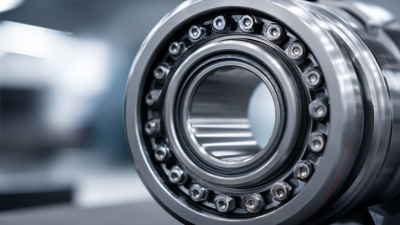
What is Angular Ball Bearing and How Does It Work?
Angular Ball Bearings play a crucial role in many mechanical applications. These bearings are designed to handle both radial and axial loads. According to a report from Grand View Research, the global ball bearing market is expected to reach $20.1 billion by 2027. This shows the growing importance of ball bearings in various industries.
The design of Angular Ball Bearings allows for higher load capacity compared to traditional bearings. They are widely used in automotive, aerospace, and industrial machinery sectors. Their ability to withstand high speeds and loads makes them invaluable. However, they can also present challenges, such as installation precision and lubrication needs.
Understanding how Angular Ball Bearings work is vital for engineers and manufacturers. Proper application ensures efficiency and longevity. Despite their advantages, improper installation can lead to premature wear and failures. Thus, gaining knowledge about these components is essential to reap their benefits.
What is an Angular Ball Bearing?
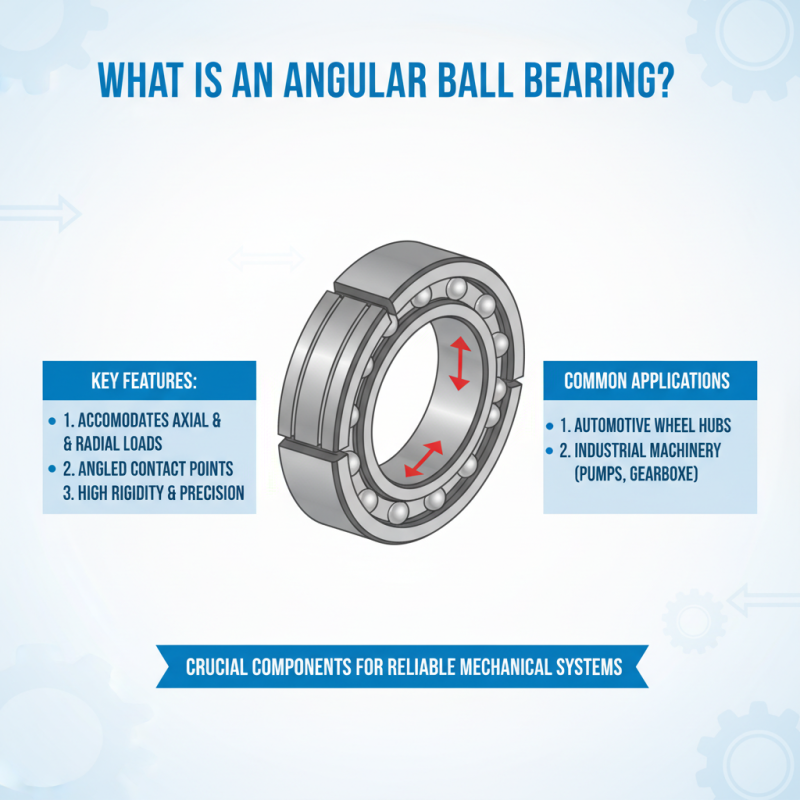
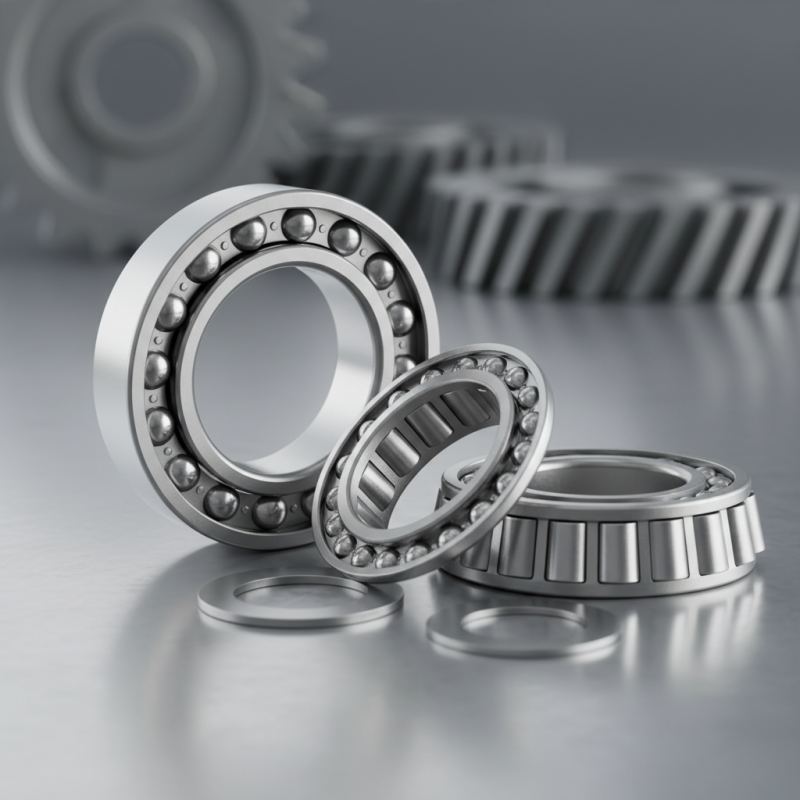
Angular ball bearings are crucial components in many mechanical systems. They are designed to accommodate axial loads in addition to radial loads. This unique feature makes them ideal for applications like automotive wheel hubs and industrial machinery.
The construction of an angular ball bearing includes inner and outer rings, along with balls arranged at a specific angle. This angle allows them to withstand higher loads compared to standard ball bearings. According to a report by the National Precision Bearing Company, these bearings can handle loads of up to 20% more than their conventional counterparts.
One challenge with angular ball bearings is that they require precise alignment during installation to function effectively. Misalignment can lead to premature wear and failure. Additionally, lubrication is essential for their longevity, as inadequate lubrication may increase friction and heat. Inadequate attention to these details can lead to significant downtime in machinery. Understanding the operational nuances of angular ball bearings can improve their performance and reliability in various applications.
The Structure and Components of Angular Ball Bearings
Angular ball bearings are essential components in many machines. They support both radial and axial loads. This unique design allows them to handle forces from multiple angles. Understanding their structure can enhance their application.
The primary components of angular ball bearings include the outer race, inner race, balls, and cage. The outer race provides stability and housing. The inner race fits onto the shaft, allowing rotation. Balls are precisely sized, providing minimal friction. The cage holds the balls in place, ensuring they move smoothly.
In assembly, precision is crucial. Misalignment can lead to premature wear. Regular maintenance checks can prevent failures. Evaluating the installation can save significant costs in the long run. Each component plays a role, but flaws can compromise performance.
How Angular Ball Bearings Function in Machinery
Angular ball bearings play a crucial role in machinery by managing thrust and radial loads simultaneously. They consist of inner and outer races, along with balls that create a contact angle. This design allows them to support heavy loads while maintaining decent speed. A report by the International Journal of Advanced Manufacturing Technology indicates that these bearings can accommodate load variations efficiently, enhancing machine performance.
In practical applications, angular ball bearings are often found in gearboxes, automotive applications, and electric motors. Their ability to handle axial and radial forces is vital for the longevity of machinery. However, the misalignment of these bearings can lead to premature failure, a common issue in manufacturing. Experts note that improper installation or lack of lubrication can cause excessive wear. Balancing precision and care in assembly is key to avoiding these problems.
Research indicates that about 15% of bearing failures are due to improper handling during installation. Observing strict guidelines can mitigate these risks, highlighting the importance of training and expertise in the workforce. The ongoing development of bearing materials and fatigue analysis tools continues to push the limits of what these components can endure, driving innovation in the industry.
Applications of Angular Ball Bearings in Various Industries
Angular ball bearings are widely used in various industries for their unique ability to handle both radial and axial loads. Their design features balls that are positioned at an angle, allowing them to withstand high speeds and heavy loads. This makes them ideal for applications where space is limited but reliability is crucial.
In the automotive industry, angular ball bearings play a key role in engines, transmissions, and wheel assemblies. Their efficiency reduces friction, improving fuel economy and performance. In robotics, these bearings are essential for precise movement and stability, often found in robotic arms and conveyors. In aerospace, they are used in landing gear and turbine engines, where safety and durability are paramount.
However, the choice of angular ball bearings can sometimes lead to challenges. Improper alignment can cause premature wear, reducing their lifespan. Maintenance is essential to avoid issues. Organizations must ensure they select the right bearing type for specific applications to maximize efficiency and reliability. Understanding these details can prevent costly mistakes in high-stakes industries.
Applications of Angular Ball Bearings in Various Industries
Advantages of Using Angular Ball Bearings Over Other Bearing Types
Angular ball bearings are known for their unique design and functionality. They can handle both radial and axial loads, making them versatile. This is unlike standard ball bearings, which primarily support radial loads. The angular contact allows these bearings to manage thrust in one direction as well. This efficiency is crucial in applications like robotics and machinery.
One key advantage is their increased load capacity. Angular ball bearings can support heavier loads than their counterparts. This characteristic enhances the performance of the machinery. With reduced friction, they operate smoothly, which prolongs their lifespan.
Furthermore, they often come with seals or shields to protect against dust and contamination. This feature ensures reliability in various conditions.
Another benefit is their ability to operate at high speeds. They maintain stability even under intense conditions. However, not all applications require these characteristics. In low-speed scenarios, simpler bearings might suffice. This leads to cost savings.
Users should evaluate their specific needs when choosing bearing types. Balancing performance requirements with the application is often necessary for optimal results.