2026 Best Taper Roller Bearing Options for Global Buyers?
In the competitive landscape of industrial components, Taper Roller Bearings play a vital role. These bearings are designed to support heavy loads while allowing for angular movement. This feature makes them essential for various applications, from automotive to manufacturing. Choosing the right taper roller bearing can impact efficiency and longevity in machinery.
Buyers must navigate a multitude of options in 2026. Various manufacturers promise high quality, but not all deliver. Understanding the specifications and reliability of taper roller bearings is crucial for making informed decisions. Evaluating factors such as material quality and design can lead to better choices.
Some brands may appear reputable but underdeliver on performance. It's essential to consider real-world user feedback for a balanced perspective. Every purchase carries risks, and thorough research can mitigate potential issues. While many suppliers offer products, discerning the best options requires a critical approach. In this landscape, knowledge is not just power; it's necessary for success.
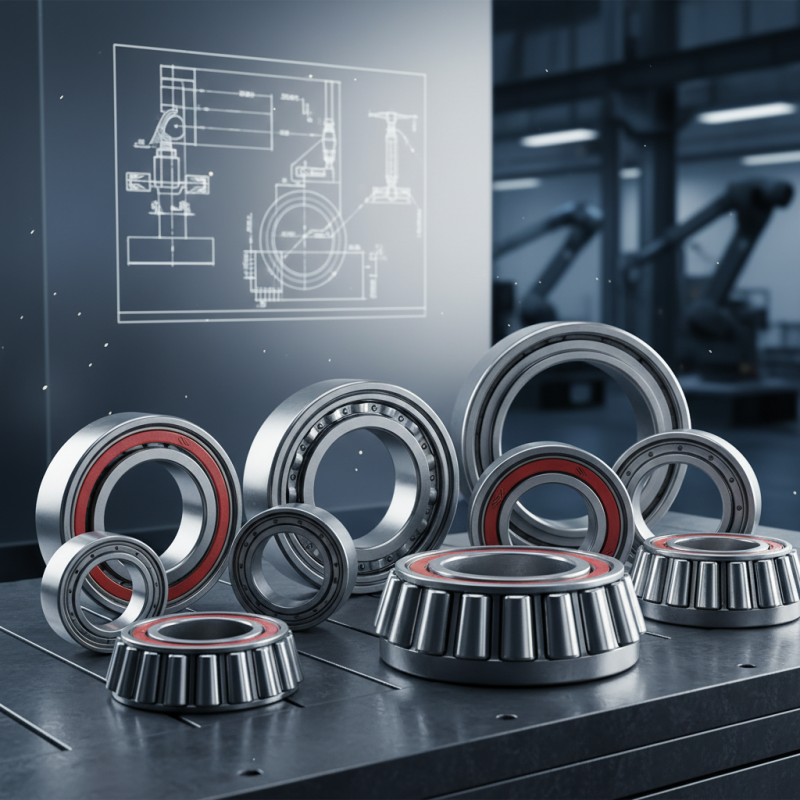
Overview of Taper Roller Bearings and Their Applications
Taper roller bearings are crucial components in various industries, offering efficiency and reliability. These bearings are designed to handle both radial and axial loads. They excel in high-speed applications, making them suitable for automotive and aerospace sectors. According to a recent market analysis by Fortune Business Insights, the global taper roller bearing market is projected to reach USD 14.78 billion by 2026, growing at a CAGR of 5.8% from 2021 to 2026.
The versatility of taper roller bearings is evident in their applications. They are essential in gearboxes, automotive transmissions, and industrial machinery. The bearings have unique tapered shapes, which allow for better load distribution. This feature contributes to lower friction and improved efficiency. For example, a study from the American Bearing Manufacturers Association highlights that taper roller bearings can enhance performance in agricultural equipment by 20%.
Despite their advantages, taper roller bearings present challenges. Proper installation is critical. Misalignment can lead to premature failure and increased maintenance costs. Understanding the specific requirements for each application is key for optimal performance. Buyers must also consider the bearing's material and lubrication to ensure longevity.
Key Factors to Consider When Selecting Taper Roller Bearings
When selecting taper roller bearings, buyers should focus on several key factors. The load capacity of the bearing is crucial. Ensure it matches your application requirements. Analyze the expected load type, whether it’s radial or axial. Misjudging this can lead to premature failure.
Next, consider the material used in the bearing. High-quality steel or specialized alloys can significantly impact performance. Look for features like heat treatment or surface finishes that enhance durability. Without these, bearings risk corrosion or wear.
Another essential aspect is clearance and tolerance. This affects how smoothly the bearing operates. Too much clearance can lead to vibration, while too little can cause overheating. It’s a balancing act that needs careful consideration. Choosing the right taper roller bearing isn’t just about cost; it’s about reliability and longevity in your machinery.
2026 Best Taper Roller Bearing Options for Global Buyers
| Type |
Load Capacity (kg) |
Speed Rating (RPM) |
Material |
Price Range (USD) |
| Standard |
1500 |
3000 |
Steel |
$10 - $15 |
| Heavy Duty |
3000 |
2500 |
Alloy Steel |
$20 - $30 |
| Precision |
1200 |
5000 |
Chromium Steel |
$50 - $70 |
| Low Noise |
1800 |
3000 |
Stainless Steel |
$25 - $35 |
| Sealed |
1600 |
4000 |
Carbon Steel |
$15 - $25 |
Top Brands and Manufacturers of Taper Roller Bearings in 2026
The world of taper roller bearings is evolving rapidly. In 2026, the market is projected to reach approximately $15.3 billion, according to industry reports. This growth reflects the increasing demand in various sectors such as automotive and aerospace. Leading manufacturers must adapt to these trends to remain competitive.
Significant players in the taper roller bearing market focus on innovation and quality. Reports highlight that companies are investing heavily in R&D, aiming to enhance performance and durability. As technology advances, the design of taper roller bearings is becoming more sophisticated. This is crucial for applications requiring high precision and reliability.
However, challenges persist. Not all manufacturers maintain the same level of quality. Inconsistent production standards can lead to performance issues. Buyers need to conduct thorough research on suppliers to ensure reliability. Despite the strong demand, some brands fail to meet expectations in terms of service and support. This inconsistency can impact overall satisfaction and long-term partnerships. Understanding these dynamics is essential for global buyers when choosing the best options for their needs.
Comparison of Performance and Pricing of Popular Bearings
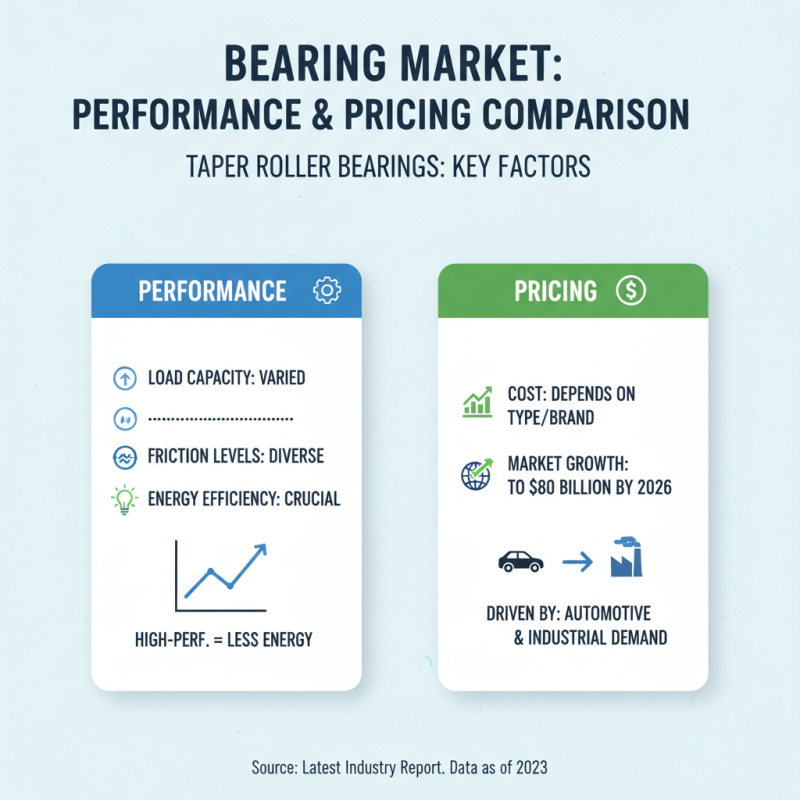
When exploring the best taper roller bearing options, performance and pricing are crucial factors. According to the latest industry report, the global bearing market is projected to reach $80 billion by 2026. This growth is driven by rising demands in automotive and industrial sectors. Different bearings offer varied load capacities and friction levels. For instance, the efficiency of a bearing can directly impact energy consumption levels, as seen in high-performance applications.
In terms of pricing, premium bearings might provide superior durability, yet come at a higher cost. Data shows that mid-range options can deliver reasonable performance at lower prices, making them viable for many applications. Several studies indicate that using a quality taper roller bearing can enhance machinery life by up to 30%. However, the availability of low-cost alternatives often complicates purchasing decisions. Buyers need to weigh long-term benefits against upfront costs when making choices.
Understanding specifications is also essential. Some bearings require specific lubricant types or operating temperatures. This adds complexity to maintenance and can lead to unexpected costs if not addressed. The challenge lies in aligning performance needs with budget constraints. Hence, careful consideration of both performance metrics and costs is vital for global buyers in selecting the best taper roller bearing options.
Future Trends in Taper Roller Bearing Technology and Market Insights
Taper roller bearings are vital in various industries. Their design allows them to support both radial and axial loads efficiently. In 2026, new advancements will focus on enhancing performance and durability. Manufacturers are experimenting with innovative materials. These materials aim to improve resistance to wear and heat.
Market insights indicate a growing preference for precision engineering. Buyers are more informed now. They seek bearings that minimize maintenance and downtime. The rise of automation will likely increase demand for high-performance bearings. However, challenges remain. Costs and quality assurance must align to meet customer expectations. This aspect often leads to difficult decisions for manufacturers, who must balance pricing with innovation.
Sustainability is also becoming a critical focus. Many buyers prefer eco-friendly materials and processes. While this trend is promising, it can complicate supply chain logistics. Efficiency in production must not be sacrificed. In conclusion, the future of taper roller bearings will be shaped by technology, market demands, and sustainability challenges.
2026 Best Taper Roller Bearing Options for Global Buyers
This chart displays the projected market share of various taper roller bearing sizes in 2026, showcasing the increasing demand across different industries.