Leave Your Message

China Best U Groove Roller Bearing Manufacturer?

Choosing China’s best U Groove Roller Bearing manufacturer is not a matter of comparing prices alone. A bearing may look sound on a product page, yet fail early if its groove profile, material, or running clearance does not match the application. Think of a guide rail carrying a repeated load: small differences in rolling smoothness can become visible as noise, heat, and downtime.

Market data shows why supplier evaluation matters. Grand View Research estimated the global bearing market at USD 112.96 billion in 2022 and projected an 8.5% compound annual growth rate through 2030. That figure covers many bearing types, not U-groove rollers alone, so it should not be treated as demand data for this specific product. Still, it reflects the scale of industries that depend on reliable motion components. Details matter.

For buyers, useful evidence includes material and hardness specifications, dimensional tolerances, load ratings, inspection procedures, and traceable test records. ISO 281 provides a recognized framework for calculating dynamic load ratings and rating life, but application conditions still affect real service life. Ask how a supplier controls groove dimensions and checks batches—not only whether it holds a certificate. A polished catalogue is not proof. The strongest shortlist combines documented quality systems with clear technical answers, stable production capacity, and samples tested under realistic operating conditions. No single factory is best for every design; the right choice depends on fit, duty cycle, and the evidence behind each claim.
China Best U Groove Roller Bearing Manufacturer?

U-Groove Roller Bearings: Profile, Load Paths, and Typical Applications

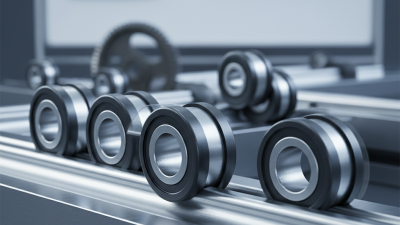
A U-groove roller bearing has a concave running surface that fits over a compatible rail or track edge. This profile helps guide movement while supporting radial loads. The groove’s width and radius must match the track; a loose fit can cause rattling, while an overly tight fit may bind. Small differences matter.

During operation, force travels from the rail into the roller and then through the bearing’s rolling elements to its shaft or mounting pin. Contact with the groove’s sides can also create lateral forces, especially when alignment is poor. These bearings guide motion, but they should not automatically be treated as thrust bearings. That distinction is easy to overlook.

Common uses include sliding gates, conveyor guides, packaging equipment, and light automation systems. A technician assessing a conveyor might check for uneven wear along one groove wall, which can signal a skewed rail or uneven loading. Selection also depends on speed, load, rail hardness, and exposure to dust or moisture. The right profile is not always obvious from a catalog drawing alone; measuring the track and checking operating conditions can prevent premature wear.
ISO 281 L10 Rating Life: 90% Reliability and (C/P)^p Million Revolutions

China Best U Groove Roller Bearing Manufacturer?

ISO 281 defines L10 as the basic rating life reached or exceeded by 90% of a sufficiently large group of identical bearings under stated conditions. It is expressed in millions of revolutions: L10 = (C/P)p. C is the basic dynamic load rating, and P is the equivalent dynamic bearing load. The exponent p depends on bearing type: commonly 3 for ball bearings and 10/3 for roller bearings. Check the bearing’s technical data before applying either value.

For example, if C is 10 kN and P is 2 kN, C/P equals 5. For a ball bearing, the calculated L10 is 125 million revolutions. This is a statistical rating, not a promised replacement interval. Dust on a track, poor lubrication, misalignment, or repeated impacts can shorten actual service life. U-groove designs also vary, so the correct load rating matters more than the groove shape alone. That detail is easy to miss.

Tips: Compare the expected load with the catalog rating, then check speed, lubrication, and alignment. Keep notes from real operating tests; calculations help, but field conditions can be less tidy.

How Material, Hardness, and Fit Affect U-Groove Bearing Performance

China Best U Groove Roller Bearing Manufacturer?

How Material, Hardness, and Fit Affect U-Groove Bearing Performance

A U-groove roller bearing depends on more than its outer shape. Its material must suit the rail, load, and working environment. Hardened bearing steel is common where steady loads and wear resistance matter. In damp or washdown areas, stainless steel may resist corrosion better, though its load capacity depends on the grade and heat treatment. There is no universal best choice.

Hardness affects how the raceway handles repeated contact. A surface that is too soft may develop dents under concentrated loads. Excessive hardness without adequate toughness can increase the risk of cracking under shock. Check the specified hardness and surface finish, not just a single advertised number. Small details matter. In practice, contamination and poor lubrication can shorten service life even when the material looks right on paper.

Fit determines whether the bearing tracks smoothly along its rail. Compare the groove radius with the rail profile, and check rail width, alignment, and bearing clearance. A tight fit may raise friction and heat; a loose fit can cause vibration or uneven wear. Measure the actual rail, since nominal dimensions are not always perfect. That extra check can feel fussy, but it often prevents a noisy installation.

China Best U Groove Roller Bearing Manufacturer? - How Material, Hardness, and Fit Affect U-Groove Bearing Performance
Performance Factor Typical Material or Fit Typical Data or Guidance Effect on U-Groove Bearing Performance Selection Check
Raceway and rolling-element material Through-hardened bearing steel, commonly equivalent to 100Cr6 / AISI 52100 Typical finished raceway hardness is approximately 60–66 HRC; actual specifications depend on design and heat treatment. High hardness and wear resistance support rolling-contact fatigue life under suitable loads and lubrication. Corrosion resistance is limited in wet or corrosive environments. Check the specified steel grade, heat treatment, effective hardened depth, and operating environment.
Corrosion-resistant material Martensitic stainless bearing steel, such as a 440C-type grade Typical hardened components may be around 58–62 HRC, depending on grade and processing. Improves corrosion resistance compared with standard bearing steel in many environments, but does not make the bearing immune to corrosion. Load capacity and life depend on the specific design. Confirm the exact material and its suitability for the chemicals, moisture, temperature, and cleaning conditions involved.
Polymer or coated contact surfaces Polymer rollers or a polymer-coated running surface Hardness is usually specified on a Shore scale (for example, Shore D), not HRC; values vary widely by polymer formulation. Can reduce noise and avoid metal-to-metal contact, but may have lower load, temperature, and wear limits than hardened steel. Use the supplier’s load, speed, temperature, and chemical-resistance ratings rather than comparing Shore hardness directly with HRC.
Raceway hardness and wear Hardened steel raceway and hardened rolling elements Hardness should be considered together with surface finish, material cleanliness, geometry, and lubrication. Insufficient hardness can accelerate indentation and wear. Greater hardness alone does not guarantee longer life if alignment, lubrication, or loading is poor. Ask for hardness measurement location and test method; verify that the specified value applies to the working surface.
Inner-ring fit on the shaft Fit selected according to which ring rotates relative to the load A rotating load on the inner ring commonly calls for an interference fit; a stationary load may permit a looser fit. The required tolerance is application-specific. An overly loose fit can allow ring creep and fretting. An excessive interference fit can reduce internal clearance and increase operating temperature. Consider shaft diameter and tolerance, load direction and magnitude, speed, temperature, and bearing internal clearance.
Outer-ring or track fit U-groove outer surface running on a rail, guide, cable, or track Groove radius and track profile should be checked against the bearing drawing; avoid assuming that nominally similar dimensions ensure correct contact. Correct profile and alignment distribute contact appropriately. Mismatch or skew can concentrate stress, increase wear, and cause noisy or uneven running. Check groove radius, track diameter, alignment, edge condition, and whether the outer ring is intended to rotate freely.
Operating clearance and temperature Clearance matched to fits and operating conditions Fit-induced expansion and temperature differences can alter bearing clearance; no single clearance value suits every U-groove application. Too little operating clearance can cause heat and premature damage; excessive clearance can increase vibration and reduce positioning accuracy. Review the bearing’s specified clearance class and calculate the effects of fit, shaft or housing material, and operating temperature.
Lubrication and contamination Grease or oil lubrication, with sealing selected for the environment Lubricant type, quantity, relubrication interval, speed, and temperature should follow the application requirements. Appropriate lubrication helps limit friction and wear. Water, dust, and insufficient or degraded lubricant can shorten service life even when material and fit are suitable. Check seals, lubricant compatibility, relubrication access, and the cleanliness of the track and surrounding area.
Engineering note: Values shown are typical reference ranges, not universal acceptance limits. Confirm material, hardness, fits, clearance, load rating, and groove geometry against the bearing drawing and application requirements.

How to Check a Chinese Manufacturer’s Tolerances Against ISO 492

China Best U Groove Roller Bearing Manufacturer?

How to Check a Chinese Manufacturer’s Tolerances Against ISO 492

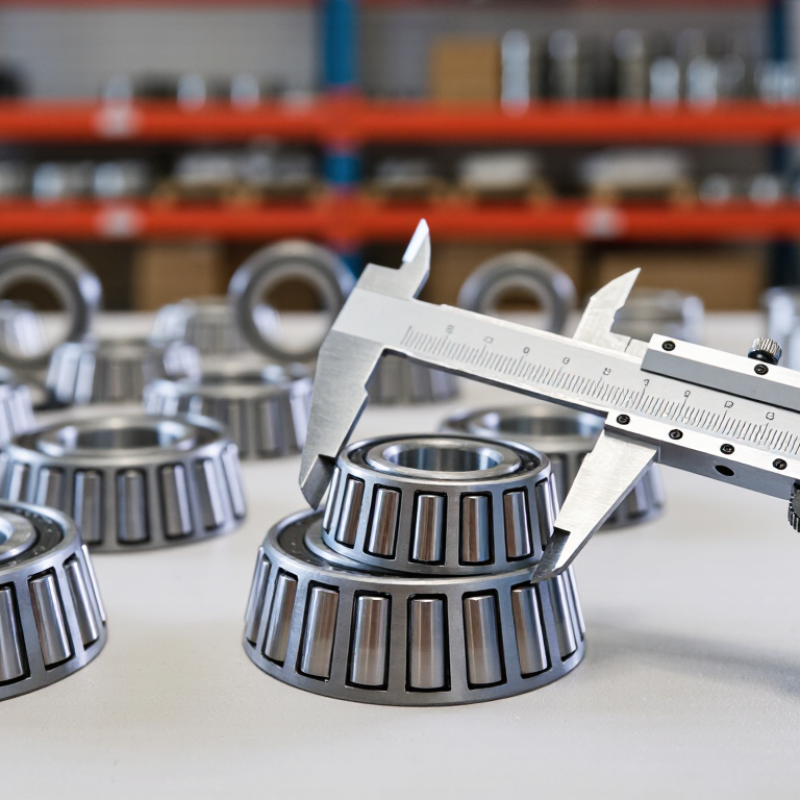
A certificate is only a starting point. Ask the manufacturer to name the tolerance class on the drawing and inspection report. ISO 492:2023 specifies dimensional tolerance values for radial bearings across classes such as Normal, P6, P5, P4, and P2. Compare the reported bore, outside diameter, and width with the exact limits for the bearing’s dimensions and declared class. Do not accept “precision grade” without a class and measured values. Numbers matter.

Request readings from several pieces in the same production lot, not only a pass/fail statement. ISO 1132-2:2001 describes measuring and gauging principles for bearing tolerances; ISO 1:2022 sets 20°C as the standard reference temperature for geometrical specifications. Ask whether measurements were taken under controlled conditions, using calibrated instruments. Raw readings help reveal variation. Averages can hide an outlier. For a U-groove roller, also check groove radius, width, and runout against the drawing: ISO 492 does not define every custom groove feature. I would still recheck a sample independently; paperwork can look tidy while a real part tells a different story.

How to Compare Manufacturers by Load Capacity, Testing, and Traceability

China Best U Groove Roller Bearing Manufacturer?
How to Compare Manufacturers by Load Capacity, Testing, and Traceability

A useful comparison starts with the actual working conditions, not a headline load rating. Ask whether the stated capacity is static or dynamic, and what assumptions support it. Share details such as wheel diameter, shaft size, speed, impact, and duty cycle. A bearing running slowly on a clean guide faces different demands from one repeatedly crossing joints. Small differences matter.

Request test records linked to the bearing type and production lot. Relevant checks may include dimensions, groove profile, hardness, runout, and rotation noise. Confirm how samples are selected and what happens when a result falls outside tolerance. Traceability should connect each lot to material and heat-treatment records, inspection results, and shipment documents. A polished report can still leave gaps, so compare its lot numbers against product labels and ask for missing links.

Tips: Put load conditions in writing. Check whether test results are lot-specific. Keep a sample and its records for later comparison. If an answer feels vague, ask for the measurement method; even experienced buyers sometimes overlook that detail.