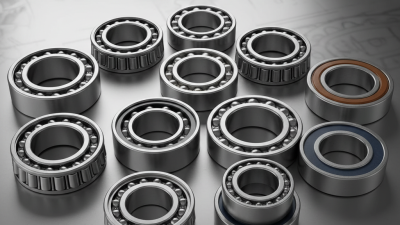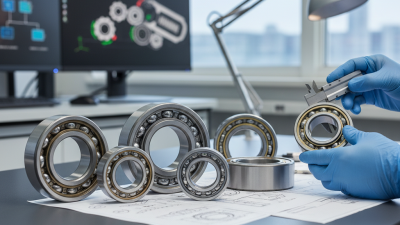
Choosing a Double Groove Ball Bearing in 2026 requires more than matching bore diameter and outside diameter. Modern machinery often combines higher speeds, compact housings, frequent starts, and demanding contamination conditions. Small details matter. Seal design, internal clearance, cage material, lubricant viscosity, and groove geometry can change performance significantly.
Tedric A. Harris, a widely cited rolling-bearing engineer and author, offered a practical warning: “Bearing life is governed by application conditions, not catalog appearance.” That principle remains valuable today. A bearing that looks suitable on paper may overheat beside a motor, develop noise under vibration, or fail early when dust enters through a poorly protected seal. Engineers should examine radial and axial loads, operating temperature, shaft fit, misalignment, duty cycle, and required service life. ISO 281 calculations can support the decision, but they cannot replace application testing or manufacturer guidance.
This guide explains how to compare Double Groove Ball Bearing options for industrial equipment, electric motors, conveyors, robotics, and precision assemblies. It considers open, shielded, and sealed designs, along with stainless steel and ceramic-related choices. It also addresses lubrication intervals, installation accuracy, sourcing reliability, and traceable quality records. A neat selection table cannot answer every real-world question. That assumption fails. Even experienced buyers sometimes prioritize price too quickly and overlook noise, heat, or replacement access. The better approach combines calculation, field experience, verified specifications, and honest review of operating conditions. In 2026, the strongest choice is not always the newest bearing. It is the one that remains dependable in the actual machine.
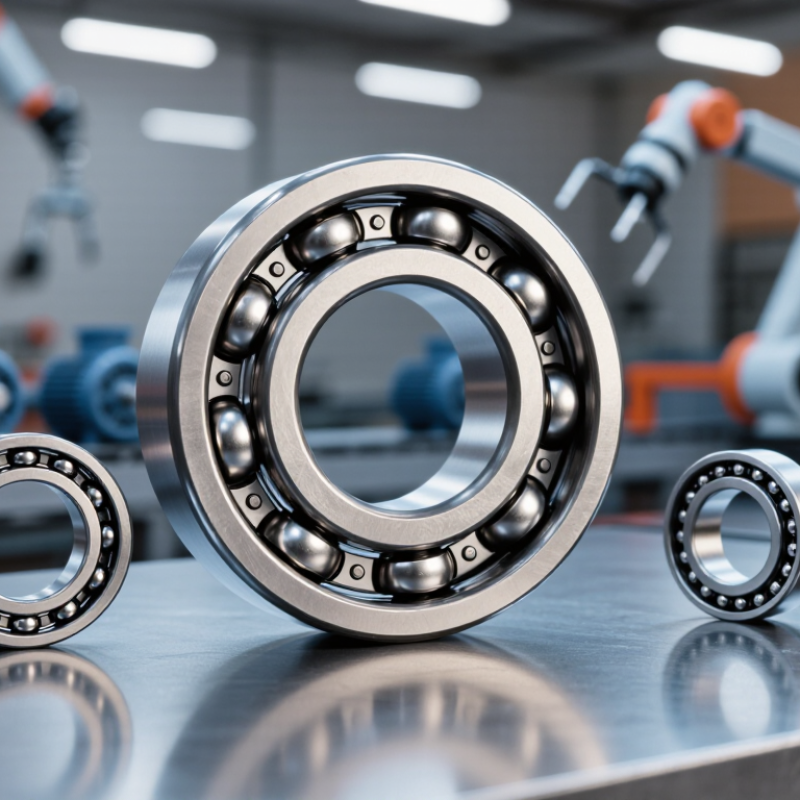
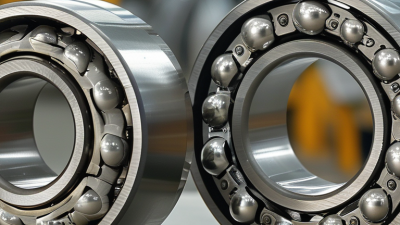
A double groove ball bearing contains two continuous raceway grooves that guide rolling balls around a common shaft. Each groove supports radial loading while sharing contact across the inner and outer rings. Depending on its geometry, the bearing may also handle limited axial force. The term is not perfectly standardized, however. Some suppliers use it for a double-row design, while others describe paired grooves in one row. Check the drawing, not only the label.
During operation, the shaft turns the inner ring, and the balls roll through a thin lubricant film. Correct clearance keeps the balls moving smoothly without excessive heat. Misalignment can create shiny tracks, noise, and early fatigue. ISO 281:2007 calculates basic rating life from dynamic load ratings and equivalent loads. It reminds engineers that life is statistical, not guaranteed. Real service conditions matter more than a catalogue promise.
The U.S. Department of Energy reports that motor-driven systems consume about 69% of industrial electricity in the United States. Small bearing losses can therefore become significant across many machines. A 2024 market report from Grand View Research estimated the global ball-bearing market at roughly USD 8.7 billion in 2023. When choosing a double groove bearing in 2026, compare speed, load direction, temperature, contamination, and lubrication intervals. A dusty conveyor needs different protection from a clean, high-speed spindle. Sometimes, the “stronger” bearing performs worse because its clearance is wrong.
How to Choose Double Groove Ball Bearings in 2026?
Selecting a double groove ball bearing starts with the actual load, not the catalog title. Measure radial force, axial force, shock, and operating hours. A bearing carrying a steady pulley load differs from one supporting a vibrating machine shaft. Compare the required load with the bearing’s dynamic and static ratings. Leave a sensible margin for impact and misalignment. In practice, unclear load data causes more failures than incorrect calculations.
Speed changes the choice quickly. Check the limiting speed under real lubrication, sealing, and temperature conditions. Grease may suit moderate speeds, while oil can manage higher heat but needs better control. Accuracy also matters. Choose the tolerance class according to shaft runout, vibration, and positioning needs. Very high accuracy adds cost and may not improve ordinary equipment. That is an easy mistake to make.
The environment often decides the final design. Dust, water spray, chemicals, and frequent washing require suitable seals and corrosion-resistant materials. In a clean, dry motor, low-friction seals may reduce heat. In a dusty conveyor, stronger protection is usually more valuable. Confirm shaft and housing fits, internal clearance, and lubrication compatibility before ordering. Small installation errors matter. I have seen a correctly rated bearing run poorly because the housing was slightly misaligned. Recheck the measurements.
| Application Requirement | Typical Load Condition | Recommended Bearing Arrangement | Load Capacity Priority | Operating Speed Guidance | Accuracy Class | Internal Clearance | Sealing and Lubrication | Environmental Requirement | Selection Checkpoint |
|---|---|---|---|---|---|---|---|---|---|
| General machinery and moderate duty | Predominantly radial load; occasional light axial load; steady operation | Single-row double-groove bearing with standard fit and normal operating clearance | Balanced dynamic load rating and service life | Usually suitable up to approximately 70% of the catalog reference speed, subject to lubrication and heat generation | Normal or standard precision class | Normal clearance for stable ambient-temperature operation | Open or shielded design for clean, accessible machinery; grease selected for the operating temperature | Clean, dry indoor environment with limited contamination | Confirm static safety factor, shaft fit, housing fit, and relubrication interval |
| High radial load and shock loading | High radial force, vibration, belt tension, or intermittent impact | Double-groove design with increased cross-section or a paired bearing arrangement where permitted | High dynamic and static load ratings; resistance to brinelling | Generally limit speed to approximately 50–60% of the reference speed when shock, heavy grease, or high preload is present | Standard precision is normally sufficient unless vibration or runout limits are strict | Normal or slightly increased clearance if shaft and housing temperatures are elevated | Contact seals for contamination control; heavy-duty grease compatible with shock loads | Dust, vibration, impact, or frequent load changes | Calculate equivalent dynamic load and verify the static safety factor against peak load |
| High-speed rotating equipment | Light-to-moderate radial load; low axial load; continuous rotation | Low-friction double-groove bearing with controlled internal geometry and balanced components | Low torque, low heat generation, and stable cage operation | Use the catalog limiting speed as the upper reference; reduce the limit for high viscosity grease, misalignment, or preload | Higher precision class when rotational runout, vibration, or speed stability is critical | Normal clearance or controlled reduced clearance after thermal analysis | Light, high-speed grease or oil lubrication; non-contact shields are preferred when contamination is low | Clean environment with controlled temperature and minimal particulate contamination | Check DN value, cage speed capability, lubricant viscosity, heat dissipation, and vibration limits |
| High positioning accuracy | Low-to-moderate load with strict radial runout, axial location, or repeatability requirements | Precision double-groove bearing installed with accurately ground shaft and housing seats | Dimensional accuracy, rotational accuracy, and controlled preload | Moderate speed unless the precision bearing, lubricant, and preload are specifically rated for high speed | Precision class selected according to allowable runout and machine tolerance | Reduced clearance or light preload only after thermal expansion and friction are evaluated | Clean assembly; carefully metered grease or oil-air lubrication for consistent friction | Controlled, clean, and temperature-stable environment | Verify shaft roundness, shoulder squareness, mounting torque, runout, and preload tolerance |
| Elevated temperature operation | Radial load with continuous thermal exposure or frequent temperature cycling | Heat-stabilized bearing with temperature-compatible cage, seals, and lubricant | Thermal dimensional stability and lubricant life | Reduce speed as temperature rises because lubricant viscosity and clearance affect heat generation | Standard or precision class depending on thermal distortion and runout requirements | Select clearance to accommodate ring expansion; do not assume normal clearance is suitable | High-temperature grease or oil; verify seal temperature limit and relubrication frequency | Continuous or cyclic temperatures above normal ambient conditions | Determine actual ring temperatures, thermal gradients, lubricant life, and clearance at operating temperature |
| Wet, dusty, or corrosive environment | Moderate radial load; contamination is more damaging than the applied load | Sealed double-groove bearing with corrosion-resistant materials or protective surface treatment where required | Contamination exclusion, corrosion resistance, and seal integrity | Use a conservative speed limit because contact seals increase friction and temperature | Standard precision class is usually adequate | Normal clearance unless moisture, temperature, or mounting conditions require an alternative | Contact seals with water-resistant grease; avoid incompatible cleaning chemicals | Water spray, humidity, abrasive dust, salt, or chemical exposure | Check seal material, corrosion resistance, washdown conditions, grease compatibility, and drainage |
| Low-noise and low-vibration equipment | Light-to-moderate, stable load with strict acoustic or vibration limits | Low-noise precision bearing with clean raceways, optimized lubricant fill, and controlled fits | Smoothness, cleanliness, low waviness, and consistent torque | Select speed according to measured temperature and vibration behavior rather than catalog speed alone | Higher precision class when runout and vibration limits are demanding | Controlled clearance; excessive preload can increase noise and heat | Low-noise grease with carefully controlled quantity; shielded or sealed design based on contamination level | Clean indoor environment where acoustic performance is important | Measure assembled vibration, verify fit tolerances, and control lubricant quantity during production |
| Limited maintenance access | Stable radial load with long unattended operating periods | Pre-lubricated sealed double-groove bearing sized for calculated fatigue and grease life | Long service life and protection against lubricant loss | Operate below the limiting speed to manage seal friction and lubricant temperature | Standard precision class unless the application requires tighter runout | Normal clearance unless operating temperature or interference fits dictate otherwise | Factory-filled grease with sealed construction; confirm grease life at actual speed and temperature | Remote, enclosed, or difficult-to-service equipment | Compare calculated rating life, grease life, seal life, and expected machine duty cycle |
How to Choose Double Groove Ball Bearings in 2026?
Material selection should match load, speed, temperature, and contamination. Chromium steel remains a practical choice for general machinery. Stainless steel suits moisture, washdown areas, and mild corrosion, but it usually carries less load. A 2024 Fortune Business Insights report valued the global bearing market at approximately US$130 billion, showing the scale of this equipment category. Still, market growth does not replace application testing.
Size must follow shaft diameter and housing limits. Check dynamic load ratings, static load ratings, and ISO 281 life calculations. A bearing that fits may still fail early. Double grooves can support paired axial guidance, but groove depth and alignment affect noise and friction. Small errors matter. Measure the shaft with a micrometer, not a ruler. I have seen “standard” housings create unacceptable preload.
Seal choice changes maintenance needs. Contact seals block dust and retain grease, while shielded designs reduce friction at higher speeds. Non-contact seals may suit clean, fast-running assemblies, but they tolerate contamination poorly. For wet environments, select corrosion-resistant material and effective seals together. Do not judge by seal appearance alone. Independent testing data should confirm temperature limits, torque, and service life. A 2023 industry analysis by MarketsandMarkets identified automation and industrial equipment as major bearing demand areas, yet real operating conditions remain highly variable. The perfect configuration on paper can still need revision after heat, vibration, or lubricant checks.
Choosing a double groove ball bearing starts with the actual operating conditions, not the catalog title. Check bore diameter, outside diameter, width, radial load, axial load, and running speed. A bearing that fits the shaft may still fail inside the housing. Measure the shaft and seat with calibrated tools. Even a small fit error can create heat, vibration, or premature wear.
Performance depends on lubrication, clearance, sealing, and alignment. For a dusty conveyor, effective seals may matter more than a higher speed rating. For a high-speed motor, excessive grease can raise temperature within minutes. Calculate the basic rating life, but treat it as an estimate. It cannot fully predict contamination, installation damage, or sudden overload. Inspect noise, temperature, and vibration during trial operation. Small changes often reveal trouble early.
Service life also depends on compatibility with the surrounding assembly. Confirm shaft hardness, housing material, grease type, operating temperature, and electrical conditions. Check whether the bearing tolerates thermal expansion at the far end of the shaft. This detail is easy to miss. Maintenance records should guide the selection, especially when earlier bearings showed flaking or cage damage. I would also question an oversized safety factor. It may look careful, but it can hide poor alignment or an incorrect load assumption. Specifications should be verified against current technical standards and the manufacturer’s published data.
Select the bearing from actual loads, not shaft diameter alone. Check radial load, axial load, speed, temperature, and housing stiffness.
Double-groove designs suit applications needing stable radial guidance and moderate axial support. ISO 281 calculates basic rating life in millions of revolutions. Use its L10 rating, then apply real contamination and alignment conditions.
Choose clearance carefully. Excessive clearance causes noise and vibration; insufficient clearance raises operating temperature.
Installation quality matters.
Clean the shaft, housing, and tools before handling the bearing. Press only on the ring receiving the interference fit. Never transmit mounting force through the balls. Keep it clean.
A 0.01 mm installation error can create uneven raceway loading in sensitive assemblies, so measure fits rather than guessing.
I once reused a contaminated mounting sleeve and shortened service life; that mistake was preventable.
Lubricate according to speed, load, and temperature.
Do not fill the housing completely. Excess grease can generate heat, especially at high speed. Record grease type, quantity, and relubrication date.
Monitor temperature, sound, and vibration during operation.
The U.S. Department of Energy’s Operations & Maintenance Best Practices guide reports predictive maintenance can reduce costs by 8–12% versus preventive maintenance and 30–40% versus reactive maintenance.
ISO 15243 also links bearing damage patterns with causes such as contamination, poor lubrication, and electrical erosion. Review those patterns before replacing a bearing blindly. Sometimes the bearing is not the real failure.