Choosing the right Tapered Roller Wheel Bearings begins with understanding how the wheel actually works. A bearing may face radial loads, cornering forces, shock, heat, and contamination at the same time. In a warehouse cart, the load may appear modest. Yet, a cracked floor joint can deliver a sharp impact through the hub. Small details matter.
Selection should connect the bearing to measurable conditions, not a familiar part number. Record the wheel diameter, axle size, expected load, speed, duty cycle, and operating temperature. Check whether the bearing uses a matching cup and cone. Mixing components from uncertain sources can create poor contact and premature wear. A caliper helps, but critical fits deserve micrometer measurements and manufacturer tolerances. Do not trust appearance alone.
The following seven tips examine practical decisions involving capacity, dimensions, alignment, lubrication, sealing, material quality, and supplier support. They also encourage a useful pause before purchase. Is the published rating based on your real duty cycle? Is the grease suitable for water, dust, or heat? A technically correct bearing can still fail when installation is careless or preload is ignored. That happens more often than many buyers admit. Reliable manufacturers provide traceable specifications, inspection data, and clear installation guidance. Still, every application has limits, and no catalog can replace field evidence. Choose carefully, inspect after service, and revise the choice when wear tells a different story.
7 Tips for Choosing Tapered Roller Wheel Bearings
Identify the load before comparing bearing sizes. Radial load comes from vehicle weight, while cornering creates an additional axial force. Measure both, including shock loads from potholes and uneven roads. A 700 mm wheel traveling at 100 km/h rotates near 758 rpm. Do not guess. Use the actual wheel diameter and maximum speed. ISO 281:2007 calculates basic rating life using dynamic load rating, applied load, and speed. Its L10 life represents 90% reliability, not a guarantee for every bearing.
Operating conditions can change the selection quickly. Record water exposure, road salt, dust, temperature, and lubricant type. ISO 76:2006 defines static load ratings using permanent deformation limits at the rolling contact. That matters when a loaded vehicle remains parked for long periods. Check installation space, shaft fit, housing stiffness, and required preload. Excessive preload raises friction and temperature; insufficient preload can cause vibration and uneven wear. I would recheck this point.
Field evidence also deserves attention. ISO 15243:2017 classifies damage linked to contamination, lubrication problems, fatigue, and mounting errors. A clean workshop is not enough if the seal design cannot resist splash water. Calculate the service load, then test the worst realistic condition. Some early calculations look precise but ignore road impacts. That is where selection often fails. Record measured temperatures and play during testing, and revise the choice when the evidence disagrees.
| Tip | Selection Dimension | Typical Data or Range | What to Check | Practical Recommendation |
|---|---|---|---|---|
| 1 | Determine the radial load | Estimate the maximum radial load, including the wheel, vehicle or machine weight, impact, and uneven-load effects. | Static load, dynamic load, shock loading, and load distribution between wheels. | Select a bearing with a static load rating above the peak stationary load and a dynamic rating suitable for the required service life. |
| 2 | Account for axial load | Tapered roller bearings can support combined radial and axial loads because their rollers contact the raceways at an angle. | Turning forces, side thrust, steering loads, rail guidance, and paired-bearing arrangement. | Use the manufacturer’s equivalent dynamic-load formula and verify the correct cone orientation and preload arrangement. |
| 3 | Match the operating speed | Speed capability depends on bearing size, load, lubrication, clearance, cage design, and heat dissipation. | Rotational speed in revolutions per minute, duty cycle, acceleration, and allowable temperature rise. | For high-speed service, reduce friction, use appropriate grease or oil lubrication, and confirm the limiting-speed value for the actual load. |
| 4 | Evaluate shock and vibration | Impact loads can substantially exceed the calculated steady radial load, especially on rough surfaces or during sudden stops. | Road or floor condition, wheel drops, braking, reversing, vibration frequency, and intermittent overloads. | Apply a suitable application or shock factor, improve wheel alignment, and avoid selecting a bearing only from the nominal static weight. |
| 5 | Check temperature and lubrication | Common industrial bearing applications operate approximately from -20°C to 100°C, while special seals, grease, or materials may be required outside this range. | Ambient temperature, frictional heat, washdown exposure, relubrication interval, and lubricant compatibility. | Choose grease with a suitable operating-temperature range and avoid over-greasing, which can increase heat at higher speeds. |
| 6 | Consider contamination and corrosion | Dust, water, chemicals, and metal particles can damage raceways and shorten fatigue life. | Ingress protection, cleaning chemicals, humidity, salt exposure, dust concentration, and seal condition. | Use effective seals or shields, maintain a clean installation environment, and select corrosion-resistant components where exposure is persistent. |
| 7 | Verify fit, alignment, and service life | Bearing performance depends on shaft and housing fits, internal clearance, alignment, preload, and mounting accuracy. | Shaft diameter, housing bore, shoulder dimensions, runout, misalignment, and target operating hours. | Calculate the required basic rating life, commonly expressed as L10, and confirm dimensions, tolerances, preload, and installation procedures before ordering. |
Note: Actual bearing selection should be validated using the application’s calculated equivalent load, speed, temperature, lubrication method, mounting arrangement, and required service life.
7 Tips for Choosing Tapered Roller Wheel Bearings
Choose the correct bearing size before comparing load ratings or materials. Measure the shaft journal, housing bore, and available width with calibrated tools. Measure twice. A bearing that fits the diameter may still fail because its width is wrong. Match the bearing’s dynamic and static load ratings to actual wheel loads, including shock from uneven floors. Consider speed, temperature, lubrication, and contamination around the wheel.
Taper geometry deserves equal attention. The cone and cup angles control how radial and axial forces travel through the rollers. A steeper angle usually supports greater axial loading, but it can increase friction and heat. Compare the included angle, roller length, and contact angle with the equipment’s load direction. Do not mix components with different geometries, even when their dimensions appear compatible. That shortcut can create uneven contact. Check alignment. Inspect the shaft and housing for scoring, burrs, or looseness before installation.
Set the required internal clearance or preload according to the wheel assembly’s service conditions. Excessive preload may raise operating temperature, while too much clearance can cause wobble and impact damage. In field repairs, a small measurement error often explains repeated bearing failures. I have seen clean, correctly sized bearings fail because the housing was slightly misaligned. Keep installation records, including measured dimensions, adjustment values, lubricant, and operating temperature. Recheck the assembly after a short run-in period, because early noise or heat can reveal a poor fit.
Tip 1: Match the bearing material to the working environment. Hardened steel suits heavy loads, while corrosion-resistant materials help around moisture and cleaning fluids.
Tip 2: Check the wheel’s shock load, not only its stated capacity. Warehouse floors often include joints, debris, and sudden impacts.
Tip 3: Confirm dimensional fit carefully. Measure the axle, housing, and available clearance before ordering.
Tip 4: Select seals according to contamination risks. Contact seals block dust and water effectively, but they can create more friction. Non-contact seals reduce drag, yet they may offer less protection.
Tip 5: Inspect the sealing lip after installation. A small twist or cut can let grease escape and contaminants enter. I have seen new bearings fail because this simple step was skipped.
Tip 6: Choose lubrication for temperature, speed, and load. High-load grease may not suit high-speed wheels, and excessive grease can raise operating heat.
Tip 7: Follow the lubricant manufacturer’s compatibility guidance, especially when changing grease types. Mixing products can weaken performance. It is easy to overlook. In practice, I record the grease type, relubrication interval, and operating temperature for every wheel assembly. That record is not perfect, but it makes future troubleshooting much more reliable.
7 Tips for Choosing Tapered Roller Wheel Bearings
Evaluate Accuracy, Clearance, and Expected Service Life
Choosing tapered roller wheel bearings starts with application evidence, not a catalog number. Measure shaft diameter, wheel load, speed, shock, and temperature. Tip one: verify dimensional accuracy with calibrated gauges. Check bore, cup, and cone tolerances carefully. A small error can create uneven contact. Tip two: match bearing accuracy to the wheel’s actual speed and load. Higher accuracy is not always better. It may increase cost without improving service.
Tip three: set internal clearance for operating conditions. Too little clearance raises friction and heat. Too much clearance allows movement, noise, and edge loading. Account for press fits, housing expansion, and temperature changes. I have seen a wheel run smoothly when cold, then tighten after a long loaded cycle. That detail is easy to miss. Tip four: inspect the mating shaft and housing. A precise bearing cannot correct a damaged seat. Measure roundness, surface finish, and shoulder squareness. Keep dirt away. Fine grit can mark a raceway.
Tip five: estimate service life from real load cycles, not maximum load alone. Include starts, stops, impacts, and idle periods. Tip six: confirm lubricant type, quantity, and relubrication access. Excess grease can be as harmful as too little. Tip seven: plan condition checks. Track temperature, noise, play, and seal condition. My early service-life estimates have sometimes been too optimistic. Recheck them after installation, because field conditions often disagree with clean calculations.
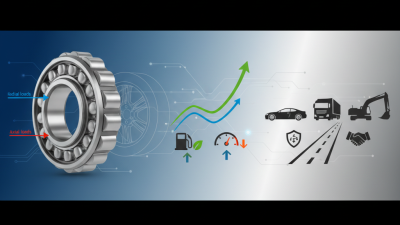
The chart compares calculated basic rating life for four generic tapered roller bearing selections. Life is based on the ISO rolling-bearing equation for roller bearings: L10 = (C/P)10/3, where C is dynamic load rating and P is equivalent dynamic load.
Use the required ISO tolerance class, such as Normal, P6, or P5. Higher accuracy can reduce runout but may increase cost and installation sensitivity.
Tapered roller bearings are normally adjusted by axial endplay or preload during installation. The correct setting depends on load, speed, temperature, and housing stiffness.
A higher C/P ratio increases calculated L10 life, but contamination, lubrication, misalignment, shock loads, and mounting quality can reduce actual service life.
Choosing tapered roller wheel bearings requires more than matching a catalog number. Verify the shaft diameter, housing bore, shoulder width, and bearing width against the engineering drawing. A bearing can look correct while fitting incorrectly.
Measure the journal and bore with calibrated tools. Check for burrs, corrosion, paint, or uneven contact marks. Clean surfaces before installation. The inner ring should seat fully against its shoulder, while the outer ring must sit squarely in the housing. Set the specified endplay or preload with controlled torque and suitable gauges. Excessive preload creates heat. Excessive looseness causes vibration and uneven wear. It is a narrow margin.
In field inspections, installation errors often appear as polished spots on only one side of the raceway. That clue deserves attention. Do not rely on visual checks alone. Confirm rotation by hand, then monitor temperature and noise during a controlled run-in. I once underestimated a small dimensional variation; it changed the adjustment noticeably. That experience supports a stricter measurement routine.
Supplier quality also needs verification. Ask for material certificates, heat-treatment records, dimensional inspection reports, and lot traceability. A documented quality system, such as ISO 9001 certification, is useful but not sufficient by itself. Review sampling methods, calibration records, and nonconformance controls. Independent testing may confirm hardness, geometry, and load-related performance. Some paperwork looks complete but lacks measurable evidence. Check the details. Keep records linking each bearing to its installation, adjustment, and inspection results.