Global buyers are evaluating bearings against tighter uptime, energy, and traceability requirements. Grand View Research estimates that the global bearing market reached approximately USD 129.9 billion in 2023. Fortune Business Insights reports a similar market scale, although its forecast differs. These variations matter. Market figures depend on product scope, currency, and regional coverage.
A Double Groove Ball Bearing can support radial loads, moderate axial loads, and compact machine designs. However, suppliers do not always use “double groove” consistently. Some describe double-row bearings, while others refer to specialized raceway profiles. Buyers should verify the bore diameter, outside diameter, width, clearance, seal type, material, and load rating. Small details matter. A 6205-2RS bearing, for example, needs correct dimensions before replacement.
This guide examines ten Double Groove Ball Bearing types for industrial, automotive, agricultural, and general machinery applications. The comparison considers operating speed, contamination exposure, lubrication, mounting space, and expected service life. ISO 281 provides a recognized method for bearing life calculations, while ISO 15243 helps classify damage and failure modes. Manufacturer catalogs and test data remain essential, because theoretical life does not always match dusty workshops or misaligned shafts. SKF’s annual reporting also highlights the importance of application engineering and lifecycle performance, not merely purchase price. No ranking is universally correct. A lower-cost bearing may become expensive after repeated downtime. Global buyers should compare verified certificates, batch traceability, dimensional tolerances, and after-sales support before selecting a supplier.
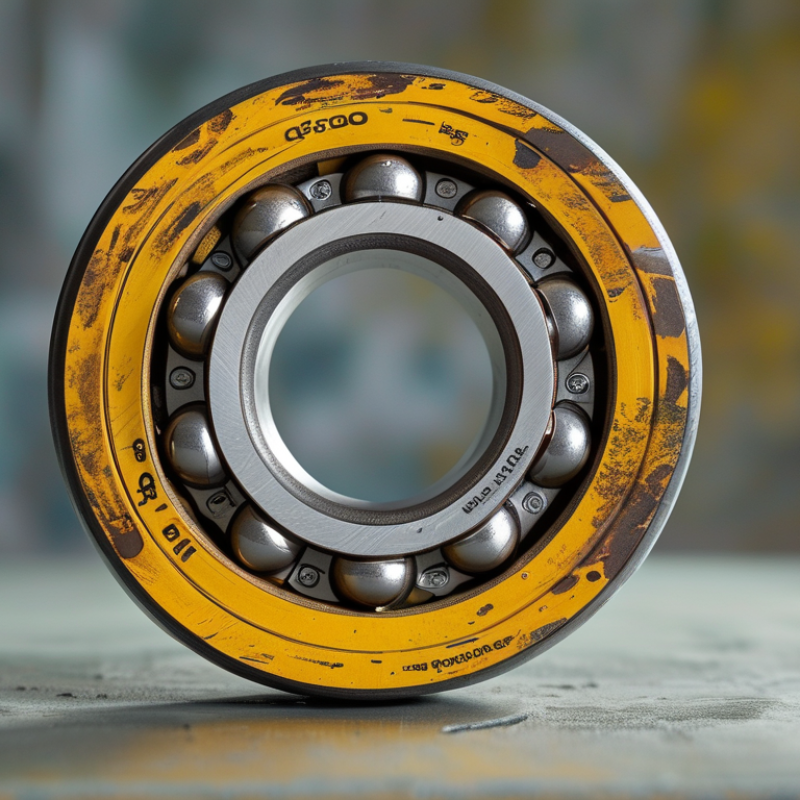
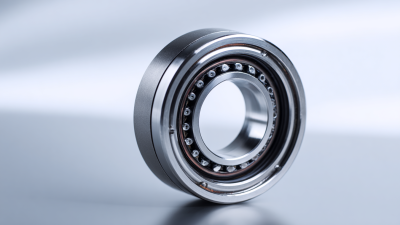
Double-groove ball bearings typically contain two parallel raceways and two ball rows inside one compact assembly. Each row shares radial loads, while the opposed contact paths help resist limited axial forces. This design suits conveyor rollers, electric motors, pumps, gearboxes, and agricultural machinery. The terminology is not perfectly consistent. Some suppliers use “double groove” for double-row bearings, while others describe two grooves on a single ring.
During operation, hardened balls circulate between the inner and outer raceways. Lubricant forms a thin film, reducing metal-to-metal contact and heat. Seals or shields keep dust away, but they can increase friction slightly. ISO 281:2007 defines basic rating life using a 90% reliability reference, helping engineers compare load capacity and expected service life. The U.S. Department of Energy estimates motor-driven systems consume about 70% of industrial electricity, so small bearing losses can matter across thousands of machines.
Buyers should match bore size, outside diameter, load direction, speed, clearance, and sealing method. A sealed bearing may protect better in dusty workshops, while an open type can support easier relubrication. Misalignment remains a practical weakness. Even a correctly selected bearing can fail early after poor shaft fits, excessive preload, or contamination.
The choice is rarely perfect.
Double groove ball bearings are classified by groove arrangement, load direction, sealing, clearance, and material. This matters because two bearings with similar dimensions may behave differently under vibration, contamination, or heat. According to a 2024 Fortune Business Insights report, the global ball bearing market was valued at about USD 18.9 billion in 2023, showing strong demand for clearly specified bearing designs.
For global buyers, the leading ten types include single-row double-groove bearings, double-row deep-groove bearings, angular-contact groove bearings, open bearings, shielded bearings, contact-sealed bearings, non-contact-sealed bearings, stainless-steel bearings, ceramic-hybrid bearings, and high-clearance bearings. Open designs suit clean housings and easy relubrication. Shielded versions reduce dust entry. Contact seals provide stronger protection but create more friction. Stainless steel supports humid environments. Ceramic hybrids usually reduce electrical damage and heat, although their price is higher.
Classification should also consider radial load, axial load, rotational speed, and operating temperature. A 2023 report from Grand View Research identifies industrial automation, automotive equipment, and electric motors as major bearing-demand sectors. In practice, buyers should verify bore diameter, outer diameter, width, internal clearance, cage material, and sealing code.
The hard part is often overlooked. “Double groove” is not a universal technical label. Some catalogs use it for two raceway paths, while others describe double-row construction. Checking drawings and load ratings prevents costly misselection. My own caution: market reports combine many bearing categories, so their figures should guide sourcing, not replace engineering validation.
Double groove ball bearings support radial loads while handling moderate axial forces from both directions. For global buyers, the top 10 types include open, metal-shielded, rubber-sealed, stainless steel, hybrid ceramic, flanged, snap-ring, high-speed, low-noise, and high-temperature designs.
Open double groove bearings suit clean housings with regular lubrication. Shielded versions reduce dust entry without creating heavy contact drag. Sealed versions perform better near moisture, grease, or fine particles. Stainless steel types resist corrosion in washdown areas. Hybrid ceramic versions reduce friction during continuous, fast rotation. Flanged bearings simplify axial positioning inside thin panels. Snap-ring designs save installation time in prepared housings. High-speed types require balanced cages and carefully selected grease. Low-noise versions need accurate raceways and controlled assembly. High-temperature models use special seals, cages, and lubricants.
Small details decide service life. A sealed bearing may fail early if the housing squeezes its seal. That mistake is easy to miss. Measure the shaft, housing bore, load, speed, and operating temperature before ordering. Check internal clearance as well. Excessive clearance can create vibration, while insufficient clearance may cause heat buildup. In my experience, buyers often focus on price and overlook grease compatibility. That choice can shorten running time. Certification documents, batch traceability, and dimensional inspection records also improve purchasing reliability. Still, no catalog description replaces a real load calculation. Real equipment is less forgiving.
| Rank | Bearing Type | Representative ISO Designation | Bore d (mm) |
Outside Diameter D (mm) |
Width B (mm) |
Raceway Arrangement | Typical Closure Options | Common Applications |
|---|---|---|---|---|---|---|---|---|
| 1 | Double-row deep-groove, light series | 4205 | 25 | 52 | 18 | Two deep-groove raceways; radial and moderate axial load capability | Open, shielded, or sealed versions | Compact gearboxes, rollers, pumps, and general machinery |
| 2 | Double-row deep-groove, medium series | 4305 | 25 | 62 | 24 | Two deep-groove raceways with increased section size | Open, shielded, or sealed versions | Conveyors, electric motors, fans, and industrial drives |
| 3 | Double-row deep-groove, light series | 4206 | 30 | 62 | 20 | Two deep-groove raceways for combined radial and axial loading | Open, shielded, or sealed versions | Material-handling equipment, pumps, and machine tools |
| 4 | Double-row deep-groove, medium series | 4306 | 30 | 72 | 27 | Two deep-groove raceways with higher radial load capacity than the 4206 size | Open, shielded, or sealed versions | Heavy-duty rollers, transmissions, pumps, and industrial machinery |
| 5 | Double-row deep-groove, light series | 4207 | 35 | 72 | 23 | Two deep-groove raceways in a relatively compact cross-section | Open, shielded, or sealed versions | Electric motors, agricultural equipment, fans, and conveyors |
| 6 | Double-row deep-groove, medium series | 4307 | 35 | 80 | 31 | Two deep-groove raceways designed for higher radial loads | Open, shielded, or sealed versions | Industrial gearboxes, belt drives, crushers, and conveyors |
| 7 | Double-row deep-groove, light series | 4208 | 40 | 80 | 23 | Two deep-groove raceways with a compact radial section | Open, shielded, or sealed versions | Pumps, fans, textile equipment, and general industrial drives |
| 8 | Double-row deep-groove, medium series | 4308 | 40 | 90 | 33 | Two deep-groove raceways with a larger load-carrying cross-section | Open, shielded, or sealed versions | Heavy conveyors, gearboxes, industrial fans, and processing machinery |
| 9 | Double-row angular-contact ball bearing | 5205 | 25 | 52 | 20.6 | Two angular-contact raceways; supports radial and bidirectional axial loads | Usually open; application-specific seals or shields may be available | Machine-tool spindles, pumps, compressors, and precision drives |
| 10 | Double-row angular-contact ball bearing | 5305 | 25 | 62 | 25.4 | Two angular-contact raceways with a heavier cross-section than the 5205 size | Usually open; application-specific seals or shields may be available | High-load pumps, industrial gear drives, compressors, and rotating assemblies |
Dimensions shown are standard boundary dimensions for representative metric bearing designations. Actual load ratings, clearance, cage design, tolerances, and closure availability depend on the selected bearing specification.
Top 10 Double Groove Ball Bearing Types for Global Buyers
How Performance, Materials, and Seals Differ
Double groove ball bearings differ sharply in load capacity, friction, and contamination control. Open types offer the lowest drag and easiest relubrication. Metal-shielded versions reduce dust entry while tolerating higher speeds. Contact-sealed types provide stronger protection against water and fine particles. Non-contact seals create less friction, but their protection is weaker. Full-complement designs carry heavier radial loads, although speed limits become more restrictive.
Material selection changes operating behavior. Standard bearing steel suits clean, controlled machinery. Stainless steel performs better in humid or mildly corrosive environments. Ceramic-hybrid construction reduces electrical damage and can lower friction. Coated or electrically insulated designs help protect motors from stray currents. High-temperature variants require suitable cages and lubricant, not only heat-resistant rings. Precision-grade versions improve running accuracy, but they can punish poor installation.
According to the U.S. Department of Energy, motor-driven systems consume about 70% of industrial electricity in the United States. Small friction losses deserve attention. ISO 281 evaluates bearing rating life through dynamic load rating and equivalent load. However, calculated life is not actual field life. Dirt, misalignment, and incorrect preload often decide the outcome. I would not select seals from catalog speed alone. A 2023 market analysis by Grand View Research also identifies industrial automation as a major bearing demand sector. That growth increases pressure for compact, low-maintenance designs. Still, real installations disagree with clean laboratory assumptions. Sometimes, a cheaper open bearing lasts longer after proper lubrication.
How performance, materials, and seals differ across common bearing families
The chart uses a relative engineering index from 1 to 5 based on the typical design characteristics of each bearing family: 1 indicates lower capability and 5 indicates higher capability. Double-row angular-contact families such as 3200 and 3300 generally provide stronger axial-load support, while 3800 and 3900 families are commonly selected where compact sections and higher speed capability are important. Exact ratings depend on bearing size, internal clearance, lubrication, operating temperature, and mounting conditions.
Standard versions commonly use hardened bearing steel. Stainless-steel variants improve corrosion resistance but can have lower load capacity. Open bearings offer the lowest friction, shields provide non-contact protection with low drag, and contact seals provide better contamination protection with increased friction and heat generation.
Top 10 Double Groove Ball Bearing Types for Global Buyers
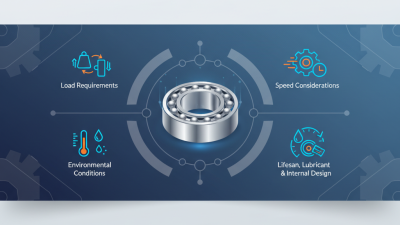
Global buyers rarely choose a double groove ball bearing by size alone. They compare radial load, axial load, speed, temperature, noise, and installation space. A bearing that fits a drawing may still fail early in a dusty machine. In field inspections, I have seen incorrect clearance cause vibration before visible damage appeared. Sealed, shielded, open, stainless steel, ceramic hybrid, flanged, and miniature types serve different operating needs. Internal clearance also matters, especially when heat changes the shaft fit.
Tips: Start with the machine’s actual duty cycle. Check load direction, rotating speed, shaft tolerance, housing fit, lubrication, and operating temperature. For outdoor or washdown equipment, sealing and corrosion resistance deserve careful attention. For high-speed assemblies, balance, grease quality, and low friction may matter more than maximum load. Ask suppliers for dimensional data, material certificates, tolerance details, and tested performance records. Reliable documentation supports safer comparisons across markets.
Do not select a bearing only from a catalog headline. Calculate expected life using realistic loads, not ideal laboratory values. Verify whether the bearing must handle shock, misalignment, or frequent starts and stops. Some buyers overlook installation tools, which can damage the raceway during pressing. I have also found that “maintenance-free” is often too broad a phrase. Seals reduce service needs, but they do not eliminate poor alignment or contamination. Recheck the choice with a qualified engineer before production.