Top 10 Agricultural Bearings for Enhanced Farm Efficiency?
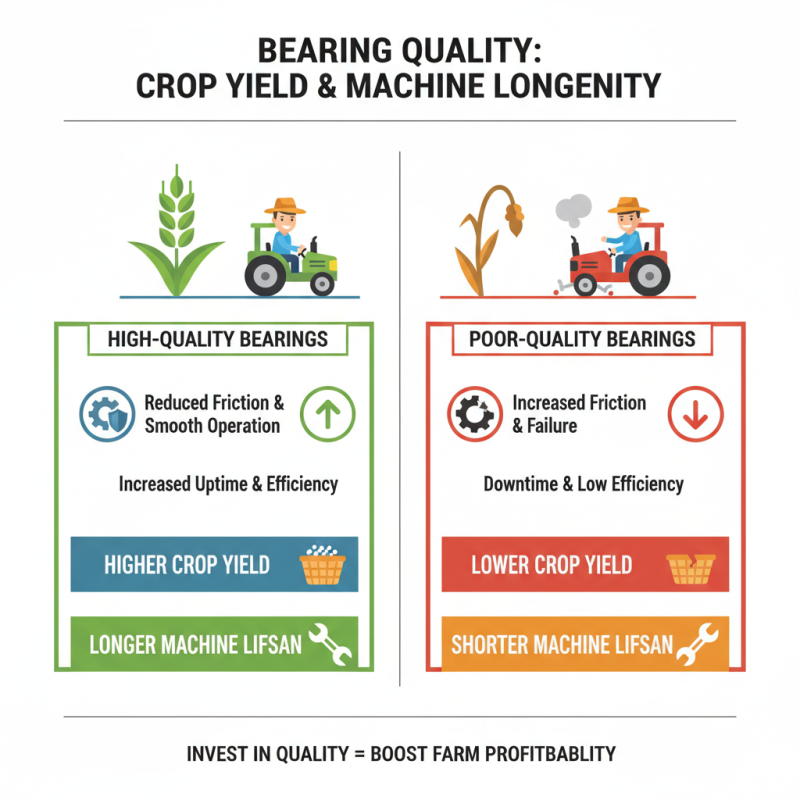
Agricultural Bearings play a crucial role in enhancing farm efficiency. According to a report by MarketsandMarkets, the agricultural bearing market is projected to reach USD 3.5 billion by 2026, growing at a CAGR of 5.2%. This growth reflects the increasing need for reliable machinery in agriculture. Expert John Williams, a leading figure in agricultural engineering, emphasizes this need by stating, “The right bearings can significantly reduce downtime and maintenance costs for farmers.”
Farm machinery operates under tough conditions. Effective bearings ensure smooth operations, durability, and longevity. Constant exposure to dirt, moisture, and varying temperatures can weaken low-quality bearings. Thus, selecting the best Agricultural Bearings becomes vital to maintaining overall efficiency. Farmers often overlook this aspect, which can lead to unexpected breakdowns and losses.
While there are numerous options in the market, knowing which bearings are most effective isn't straightforward. It's not just about brand recognition—understanding specifications and intended applications is key. A poor choice can lead to failures and costly repairs. High-quality bearings improve equipment performance, but farmers need to do their homework. This call for informed decision-making underscores the complexity surrounding Agricultural Bearings in modern farming.
Top 10 Agricultural Bearings: Optimizing Performance on the Farm
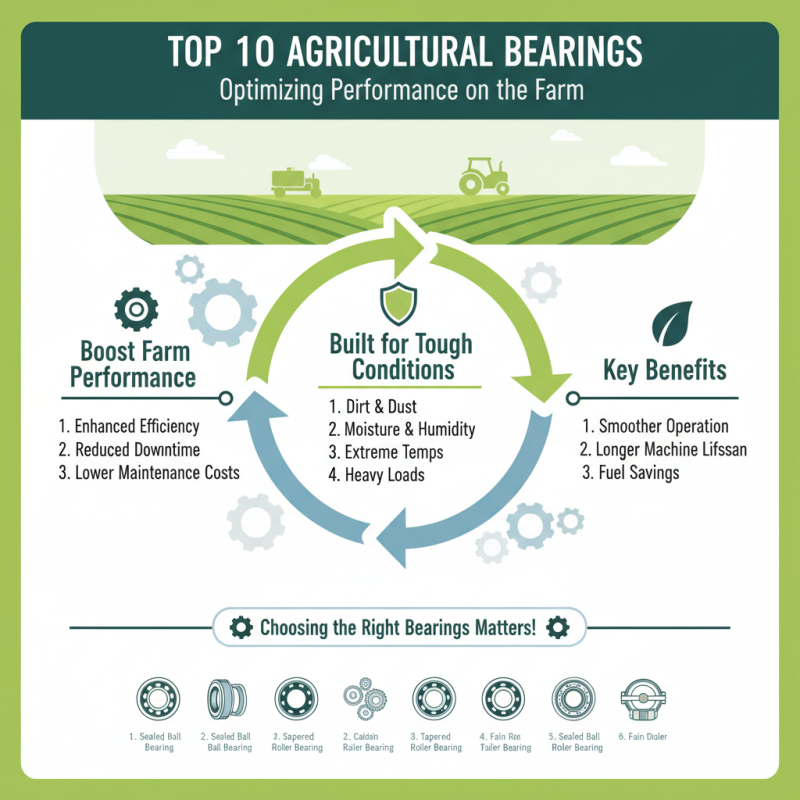
In the realm of modern agriculture, selecting the right bearings can significantly boost farm performance. Agricultural bearings are essential components that ensure machinery operates smoothly. They have to endure tough conditions, from dirt and moisture to extreme temperatures. Choosing the best type can lead to improved efficiency and lower maintenance costs.
When selecting bearings, consider the application. Different tasks require different specifications. Some might need high load capacity, while others need resistance to corrosion. Using the wrong bearing can result in frequent breakdowns. This not only affects productivity but can also lead to unexpected repair costs.
**Tip:** Regularly inspect bearings for wear and tear to avoid downtime. Keep them clean and lubricated.
It’s also wise to consult with experts. They can provide insights tailored to specific farming needs. Understanding the unique requirements of equipment can lead to better choices.
**Tip:** Research the material and design of bearings. Prioritize those built for heavy-duty use in agricultural settings.
Investing time in selecting the right agricultural bearings is crucial. Explore options that suit the demands of your farm. Making informed decisions leads to long-term benefits.
Understanding Different Types of Agricultural Bearings and Their Functions
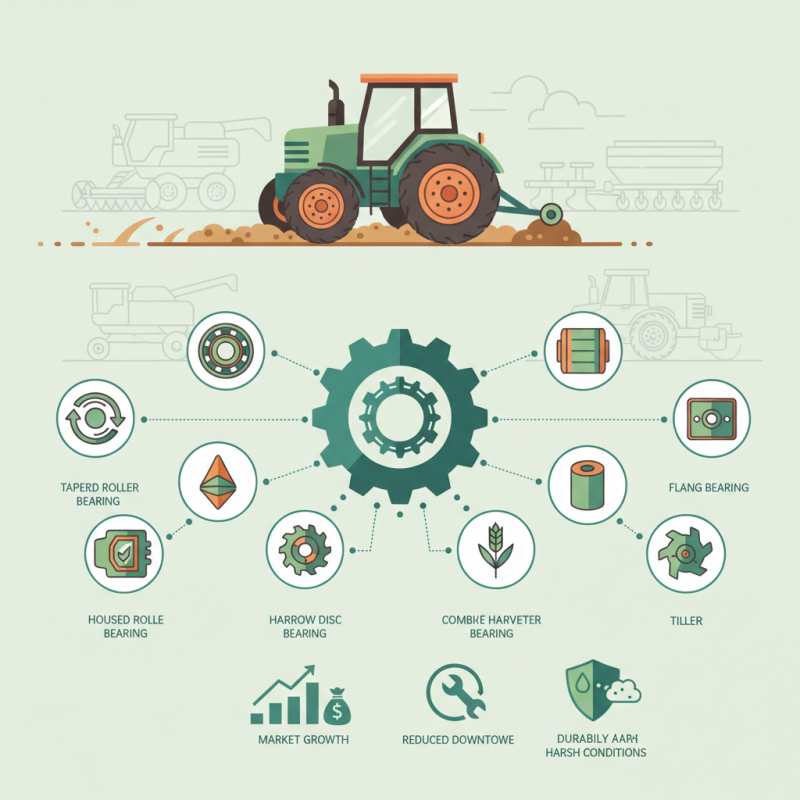
Agricultural bearings play a vital role in enhancing farm efficiency. They facilitate smooth movement in various machinery, like tractors and harvesters. Each type of bearing serves a specific function, impacting overall equipment performance. For instance, deep groove ball bearings are well-known for their versatility and reliability in various loading conditions.
Roller bearings are another essential type. They handle radial and axial loads better than ball bearings. These are commonly used in tillers and seeders. On the other hand, pillow block bearings provide extra support. These are usually mounted on frames, reducing misalignment issues in equipment. It’s crucial for farmers to choose the right bearing for their needs. Incorrect choices can lead to increased wear and a shorter lifespan of machinery.
Understanding these types of bearings requires some experience. Farmers often learn through trial and error. Sometimes, they overlook the importance of regular maintenance. Neglecting to check bearings can result in costly repairs. Even a minor issue can disrupt the entire workflow. Consistent evaluation of bearing conditions can prevent larger failures down the line. This reflects the delicate balance between machinery and agricultural productivity.
Key Factors Influencing Bearing Selection for Farm Equipment
When choosing bearings for agricultural equipment, several factors come into play. Farmers must prioritize material selection. Stainless steel and chrome steel are common, but each has unique benefits. Stainless steel resists corrosion better, while chrome steel offers higher load capacity. Understanding the environment where equipment operates helps inform this decision.
Lubrication is another critical aspect. Proper lubrication prevents wear and tear. It may be tempting to overlook this, but doing so can lead to premature failure. Grease type and application frequency influence bearing lifespan significantly. An ideal strategy involves regular maintenance inspections to ensure reliability.
Farmers often face challenging conditions. Dust, moisture, and extreme temperatures can adversely affect equipment. Choosing the right bearings can mitigate some of these risks. Evaluating bearing seals and shields can protect against contaminants. Sometimes, farmers need to reflect on their current practices. Are they investing enough in quality components? Making intentional choices today can lead to better productivity tomorrow.
Top 10 Agricultural Bearings for Enhanced Farm Efficiency
This chart illustrates the load capacity of the top 10 agricultural bearings commonly used in farm equipment, showcasing their importance in enhancing farm efficiency.
Current Trends in Agricultural Bearing Technology for Enhanced Efficiency
In today's agricultural sector, bearing technology plays a key role in enhancing farm efficiency. Modern bearings are designed for resilience, longevity, and ease of maintenance. A recent industry report indicates that advancements in materials, such as ceramic and composite bearings, can improve wear resistance by 30%. This reduction in wear not only enhances performance but also extends the life of machinery.
Farmers need to consider the compatibility of bearings with their specific machinery. Wrong choices or improper installations can lead to inefficiencies or even equipment failure. Regular inspections are essential to identify wear and prevent costly downtime. A study highlighted that predictive maintenance strategies can reduce breakdowns by 25%. Understanding the signs of bearing failure can help farmers take timely actions.
Tips: Choose bearings with seals that fit your operating environment. This can prevent contamination. Additionally, consider the load distribution of your machinery. It can affect bearing performance.
Innovation continues to shape the agricultural bearing landscape. Higher speed capabilities and reduced friction are trending. Yet, some farmers may overlook these advancements. Investing in newer technologies can lead to substantial savings in fuel and maintenance costs. Embracing change is essential for those seeking efficiency.
Top 10 Agricultural Bearings for Enhanced Farm Efficiency
| Bearing Type |
Material |
Load Capacity (kg) |
Operating Temperature (°C) |
Best Application |
| Deep Groove Ball Bearing |
Steel |
5000 |
-20 to 120 |
Tractors |
| Self-Aligning Ball Bearing |
Chrome Steel |
3200 |
-10 to 100 |
Combine Harvesters |
| Spherical Roller Bearing |
Alloy Steel |
8000 |
-30 to 150 |
Plowing Equipment |
| Tapered Roller Bearing |
Stainless Steel |
6000 |
-20 to 130 |
Seeders |
| Angular Contact Bearing |
Ceramic |
4500 |
-40 to 120 |
Irrigation Pumps |
| Needle Bearing |
Carbon Steel |
3000 |
-20 to 90 |
Cultivators |
| Thrust Bearing |
Plastic |
2000 |
-25 to 85 |
Fertilizer Spreaders |
| Cartridge Bearing |
Ferroaluminum |
3500 |
-20 to 110 |
Agricultural Machinery |
| Rolling Bearing |
Nickel Alloy |
4500 |
-15 to 95 |
Field Equipment |
| Linear Bearing |
Bronze |
2500 |
-10 to 80 |
Automated Systems |