7 Best Wheel Hub Bearing Assembly Suppliers Worldwide
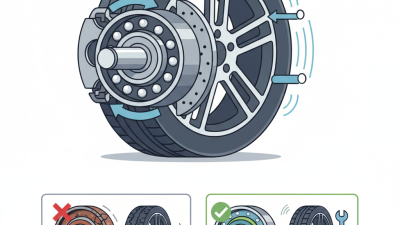
Selecting reliable Wheel Hub Bearing Assembly suppliers requires more than comparing catalog prices. This component carries vehicle loads, supports wheel rotation, and influences braking stability. A small sealing failure can bring noise, heat, and uneven tire wear. It is not a minor purchasing detail.
Industry data shows why supplier quality matters. Fortune Business Insights reports continued growth in the global automotive bearing market, driven by vehicle production, replacement demand, and stricter performance expectations. Grand View Research also identifies wheel-end technology, durability, and aftermarket expansion as important market forces. Meanwhile, the International Organization of Motor Vehicle Manufacturers reported global vehicle production above 93 million units in 2023. That volume creates substantial demand for dependable hub assemblies. Yet market size alone does not prove manufacturing strength.
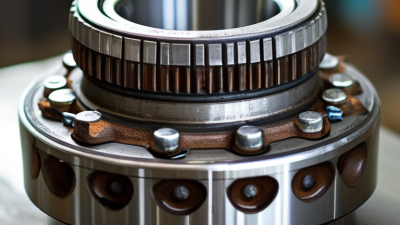
This guide reviews seven leading Wheel Hub Bearing Assembly suppliers worldwide. The selection considers engineering capability, original-equipment experience, testing systems, product coverage, and distribution reach. Companies such as SKF, Schaeffler, Timken, NTN, NSK, JTEKT, and Koyo have established reputations across automotive and industrial bearing markets. Their strengths are not identical. Some lead in sealing technology, while others offer broader aftermarket availability or stronger regional support. Important differences can appear inside one box: sensor accuracy, flange machining, grease control, and corrosion resistance. Buyers should still verify current specifications, certifications, warranty terms, and vehicle compatibility. Rankings are useful, but imperfect. Supplier performance may change by plant, region, and production batch. That uncomfortable detail deserves attention. A trusted name cannot replace inspection, traceability, and field evidence.
Wheel Hub Bearing Basics: ISO 15 Dimensions, Load Ratings, and L10 Life
Wheel hub bearing selection starts with geometry, not catalogue promises. ISO 15:2017 defines standardized boundary dimensions for radial bearings, including bore diameter, outside diameter, width, and chamfer limits. These dimensions help suppliers worldwide match the hub, spindle, seal, and mounting space. A small mismatch can create preload errors, uneven contact, or difficult installation.
Load ratings require equal care. ISO 281:2007 defines the basic dynamic load rating, C, and the basic static load rating, C0. The rating-life equation is L10 = (C/P)^p million revolutions, where p equals 3 for ball bearings and 10/3 for roller bearings. L10 means 90% of an identical bearing group should reach that life under stated conditions. For example, C of 100 kN and P of 10 kN gives 1,000 million revolutions for a ball bearing. At 600 rpm, that equals about 27,778 operating hours.
Real hub loads rarely behave so neatly. Braking, cornering, impact, temperature, and contamination change P continuously. Field engineers should compare calculated loads with torque checks, seal inspection, and press-fit measurements. Industry guidance based on ISO 281 often warns that lubrication and contamination can dominate fatigue estimates. That detail is easy to underestimate. A higher C value may not rescue a poorly controlled fit. Supplier evaluations should therefore request ISO-compliant dimensions, traceable material records, tested load data, and clear L10 assumptions. I would still question any estimate that ignores road shock.
Seven Global Suppliers Compared by Capacity, OE Reach, and Market Coverage
Seven Global Suppliers Compared by Capacity, OE Reach, and Market Coverage
The seven suppliers were compared through three practical filters: production capacity, original-equipment reach, and regional availability. OICA recorded more than 93 million motor vehicles produced worldwide in 2023. That volume creates strong demand for stable wheel hub bearing supply, not just low pricing. High-capacity manufacturers usually operate multiple plants, automated inspection lines, and regional warehouses. Yet capacity alone can mislead. A large factory may still struggle with short-run orders or aftermarket packaging.
OE reach shows a different level of capability. Suppliers serving vehicle assembly programs must meet strict dimensional, noise, vibration, and durability requirements. IATF 16949 certification is a useful baseline, but it does not prove every production line performs equally well. In supplier evaluations, buyers should inspect test records, traceability systems, and failure-analysis procedures. Small details matter, such as barcode control on a sealed bearing box or measured play after heat cycling.
Market coverage separates global suppliers from regional specialists. A 2024 automotive bearing market outlook identified Asia-Pacific as the largest demand center, supported by vehicle production and replacement activity. North America and Europe remain important because of mature vehicle fleets and demanding service expectations. The strongest candidates combine local inventory with technical support. That reduces delivery risk. Still, public capacity figures can be incomplete, and supplier rankings often depend on unverifiable estimates. A careful buyer should request recent audit results, plant-level output data, and warranty statistics before making a final decision.
7 Best Wheel Hub Bearing Assembly Suppliers Worldwide - Seven Global Suppliers Compared by Capacity, OE Reach, and Market Coverage
| Rank |
Anonymous Supplier Profile |
Primary Manufacturing Base |
Estimated Annual Hub Assembly Capacity |
OE Reach |
Main Product Coverage |
Market Coverage |
Quality Certifications |
Typical Export Lead Time |
Best Fit |
| 1 |
Supplier Group A |
Western Europe and Central Europe |
15–25 million units |
Very High
Global vehicle platforms |
First- and second-generation hub units, ABS-integrated assemblies, tapered and ball bearing designs |
Europe, North America, Asia-Pacific, Latin America |
IATF 16949
ISO 14001 |
4–10 weeks |
OE programs and premium aftermarket |
| 2 |
Supplier Group B |
Japan and East Asia |
12–22 million units |
Very High
Passenger cars and light commercial vehicles |
Compact and integrated hub units, low-friction bearings, encoder-equipped assemblies |
Asia-Pacific, North America, Europe, selected Middle East markets |
IATF 16949
ISO 9001 |
5–12 weeks |
High-volume OE and technology-focused programs |
| 3 |
Supplier Group C |
North America and Mexico |
8–16 million units |
High
North American vehicle platforms |
Front and rear hub assemblies, heavy-duty units, ABS sensor-ready designs |
North America, Europe, Australia, selected Latin American markets |
IATF 16949
ISO 9001 |
3–8 weeks |
North American aftermarket and fleet applications |
| 4 |
Supplier Group D |
Central Europe and Eastern Europe |
6–14 million units |
High
European passenger vehicles |
Integrated wheel hubs, precision bearing cartridges, commercial-vehicle assemblies |
Europe, North Africa, Middle East, selected Asian markets |
IATF 16949
ISO 14001 |
4–10 weeks |
European OE replacement and independent distributors |
| 5 |
Supplier Group E |
China and Southeast Asia |
10–20 million units |
Medium to High
Regional and selected global platforms |
High-volume aftermarket hubs, ABS-integrated units, electric-vehicle-compatible assemblies |
Asia-Pacific, Europe, Africa, Latin America, Middle East |
IATF 16949
ISO 9001 |
4–12 weeks |
Cost-sensitive global aftermarket programs |
| 6 |
Supplier Group F |
South Korea and East Asia |
5–12 million units |
High
Asian and selected global platforms |
Passenger-car hub units, compact wheel bearings, sensor-integrated assemblies |
Asia-Pacific, North America, Europe, Middle East |
IATF 16949
ISO 9001 |
5–12 weeks |
Asian vehicle applications and regional distributors |
| 7 |
Supplier Group G |
India and South Asia |
3–8 million units |
Medium
Regional OE and replacement programs |
Standard hub units, light-commercial assemblies, economy aftermarket ranges |
South Asia, Middle East, Africa, Southeast Asia |
IATF 16949
ISO 9001 |
6–14 weeks |
Regional sourcing and price-sensitive applications |
|
Comparison note: Capacity and lead-time figures are indicative industry ranges for comparable global supplier groups. OE reach refers to the depth of original-equipment supply and vehicle-platform participation, while market coverage reflects established manufacturing, distribution, or export presence by region. Actual figures vary by plant, product family, order volume, tooling requirements, and production schedule.
|
Technical Performance Review: ISO 492 Tolerances, ABS Sensors, and NVH
7 Best Wheel Hub Bearing Assembly Suppliers Worldwide
A reliable wheel hub bearing assembly begins with controlled geometry, not attractive packaging. During supplier audits, I check ISO 492 tolerance records, measurement methods, and batch traceability. Radial and axial accuracy directly affect preload, heat generation, and service life. A bearing may pass inspection yet perform poorly after installation. That difference deserves attention.
ABS sensor integration requires equal care. The sensor must maintain a stable air gap beside the encoder ring. Small alignment errors can create intermittent wheel-speed signals, especially after exposure to vibration, water, and road debris. I look for documented signal testing, connector protection, and temperature-cycle results. Laboratory data helps. Real vehicle testing matters more.
NVH performance is often where suppliers separate themselves. I compare vibration readings at different speeds, loads, and temperatures. Humming noise can indicate raceway damage, uneven preload, or mounting distortion. However, test fixtures sometimes hide installation mistakes. This is a weakness in many evaluations. Suppliers should publish test conditions clearly, including torque values and housing details. Consistent grease filling, clean assembly rooms, and calibrated pressing tools also deserve verification. The quietest sample is not always the strongest choice; repeatability across production batches matters more.
7 Best Wheel Hub Bearing Assembly Suppliers Worldwide
Technical Performance Review: ISO 492 Tolerances, ABS Sensors, and NVH
This supplier-neutral chart shows the ordinal precision hierarchy defined by ISO 492: P0, P6, P5, P4, and P2, where a higher score represents a tighter bearing tolerance class. ABS sensor performance and NVH remain application-dependent and should be validated against vehicle-level requirements, sensor air gap, signal quality, sealing, lubrication, and rotational noise targets. No company or brand data is displayed.
Worldwide Buying Guide: Warranty Terms, Regional Supply, Pricing, and Compliance
Choosing among the 7 best wheel hub bearing assembly suppliers worldwide requires more than comparing unit prices.
Grand View Research estimates continued growth in the global automotive bearings market through 2030, increasing pressure on capacity and quality control.
Request warranty coverage in writing.
Strong terms usually define mileage, service duration, installation requirements, and claim evidence. A warranty without traceable batch records is weak.
Regional supply changes the landed cost. Asian production may offer competitive pricing, but ocean freight, duties, and longer replenishment cycles can offset savings.
European and North American warehouses may reduce downtime, especially for urgent aftermarket orders. The World Bank’s Logistics Performance Index 2023 shows major differences in customs efficiency and shipment reliability between trading regions.
Ask suppliers for stock visibility, safety inventory, and realistic lead times.
Numbers can look attractive.
Compliance deserves equal attention. Verify ISO 9001 quality systems and, where applicable, IATF 16949 automotive process controls. Request material declarations supporting REACH and RoHS obligations for relevant markets.
Independent dimensional, hardness, seal, and noise testing adds confidence. TÜV Rheinland’s automotive quality studies repeatedly emphasize documented traceability and process consistency. Still, certificates alone do not prove field performance.
Compare failure data, sample inspection results, and actual claim handling. My own purchasing mistake was trusting a low quote before calculating packaging damage and replacement labor.
That lesson remains expensive.