2026 Best Double Groove Ball Bearing Types for Buyers
A Double Groove Ball Bearing can look like a simple component on a catalog page. In service, its paired grooves shape how it guides mating parts, handles contact, and fits an assembly. Buyers comparing 2026 options should look beyond diameter and price. Groove profile, material, lubrication, sealing, load direction, speed, noise, and mounting space all matter. A bearing that feels smooth in hand may still be wrong for a dusty conveyor or a compact roller. Small details count.
This guide compares common types and explains where each may suit a real application. It also highlights trade-offs between open, shielded, and sealed designs, plus the checks buyers should make before ordering. A useful reminder from the guide’s fictional bearing specialist, Alex Morgan, is: “Match the groove to the duty, not just the drawing.” This is an editorial quote, not a sourced industry statement. It captures a practical point, though it cannot replace a manufacturer’s specifications. One easy mistake is treating every double-groove design as interchangeable. They are not. Check the load path, shaft fit, operating temperature, and maintenance plan against the product data. If details are missing, pause and ask the supplier. That extra question can prevent a noisy fit, early wear, or a costly redesign. And yes, choosing can still feel uncertain.
Define Double-Groove Ball Bearings by Raceway Design and Load Direction
2026 Best Double Groove Ball Bearing Types for Buyers
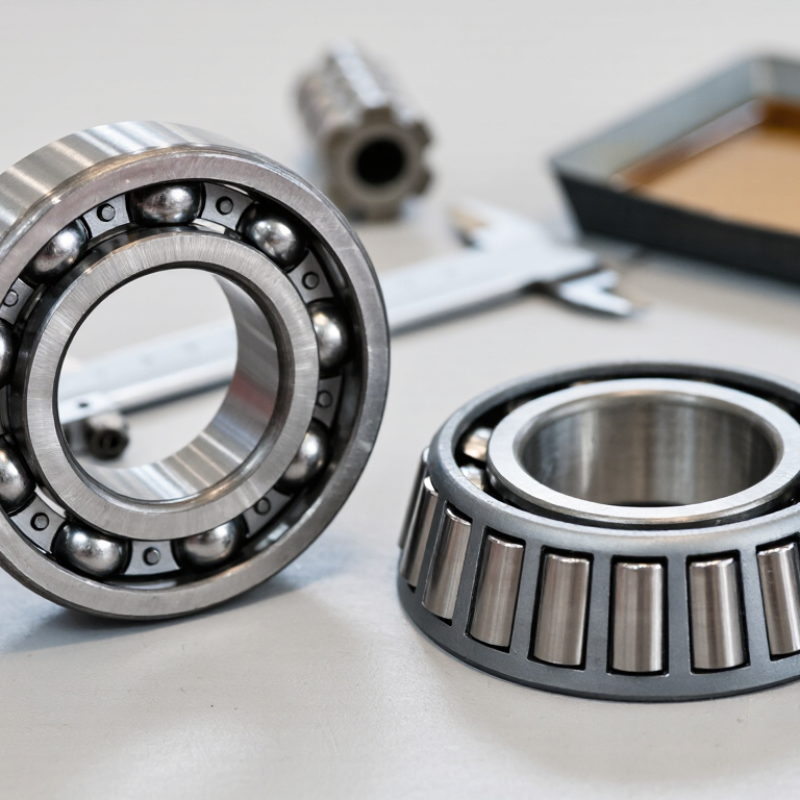
Double-groove ball bearings are best identified by their raceway layout, not by the name alone. In a double-row design, two ball rows run in paired grooves formed in the inner and outer rings. This arrangement can support radial loads and axial loads from either direction. It spreads load across more contact points than a comparable single-row bearing. But capacity depends on internal geometry, clearance, cage, and operating speed. “Double” does not guarantee a fixed rating. The label alone can mislead.
Buyers should distinguish this layout from a bearing with one ball row and specially shaped grooves. Raceway curvature guides the balls and affects contact stress, friction, and performance under combined loads. These bearings generally suit radial service with moderate axial forces in both directions. Heavy thrust, misalignment, or shock may call for another arrangement. Check the drawing and load table, not just a catalog heading.
Tips: Ask for a sectional drawing showing both raceways and ball rows. Compare radial and axial ratings at the actual speed and temperature. Confirm fit, lubrication, and internal clearance for the equipment. A small mismatch can cause noise or heat. I would still verify the term with the supplier. Naming practices vary, and that detail is easy to overlook.
Compare Single- and Double-Row Types Using ISO 15 Boundary Dimensions
For buyers comparing single- and double-row deep groove ball bearings, ISO 15 boundary dimensions offer a practical starting point. The standard defines bore, outside diameter, and width—not load capacity or service life. For example, common 6208 single-row dimensions are 40 × 80 × 18 mm; a 4208 double-row bearing measures 40 × 80 × 23 mm. These figures follow the ISO 15 dimensional series. The extra five millimeters of width can matter when a housing has little axial clearance. Fit matters.
A single-row type is often easier to install and suits compact arrangements. A double-row type can support radial loads and axial loads in both directions, while taking up more space. Check the actual load, speed, lubrication, and mounting conditions before choosing; row count alone is not a capacity rating. ISO 281:2007 gives the basic rating-life method: for ball bearings, L10 = (C/P)³ million revolutions, at 90% reliability. Here, C is basic dynamic load rating and P is equivalent dynamic load. That is not trivial. ISO 15 cannot supply these ratings, so compare each candidate’s technical data alongside its boundary dimensions. A neat dimensional match may still require a second look.
2026 Best Double Groove Ball Bearing Types for Buyers - Compare Single- and Double-Row Types Using ISO 15 Boundary Dimensions
Compare representative 25 mm bore deep-groove ball bearings by row count and ISO 15 boundary dimensions. Dimensions are shown as bore × outside diameter × width (d × D × B), in millimetres.
Selection note: ISO 15 specifies boundary dimensions, not load ratings, internal clearance, sealing, lubrication, or permissible speed. Confirm those requirements—and the exact bearing designation—with the supplier’s technical data before ordering.
Choose Open, Shielded, or Sealed Designs for Operating Conditions
Double groove ball bearings are available in open, shielded, and sealed designs. The right choice depends on dust, moisture, speed, and lubrication access. An open bearing suits a clean, protected housing where regular relubrication is practical. It can shed heat readily, but offers little protection by itself. Fine grit near the raceways can quickly change the noise and feel of operation.
Metal shields help block larger particles and retain grease, while adding little contact drag in many designs. They are not watertight. Sealed bearings offer stronger protection against dust and splashes, making them useful near washdown areas or exposed machinery. Contact seals can create extra friction and heat, so check the bearing’s rated speed and temperature. There is no universal winner. A tidy product description may not reflect the actual moisture, debris, or service interval at your site.
Tips: Match the seal type to the real environment, not just the machine’s nameplate. Check lubrication needs, shaft speed, and available space. If conditions vary, record bearing temperature and noise after installation; those checks can reveal a poor fit early.
2026 Best Double Groove Ball Bearing Types for Buyers
Choose open, shielded, or sealed designs based on operating conditions.
The chart compares typical closure features: 1 means present and 0 means absent. Open bearings have no closure; shields are typically non-contact, while contact-sealed designs use a sealing lip. Seal constructions vary, so check the specific bearing specification and operating limits before selection.
Specify Radial Clearance Classes According to ISO 5753-1
For a double groove ball bearing, radial internal clearance is the movement between its rings before installation. It affects how the bearing handles load, heat, and operating speed. Small detail, big consequences. ISO 5753-1 provides clearance classes, but the applicable values depend on bearing type and bore size. Check the relevant table rather than assuming one value fits every design.
C2 indicates less clearance than the Normal class; C3, C4, and C5 indicate progressively greater clearance. A tight interference fit can reduce clearance after mounting, while operating heat can reduce it further. For a bearing fitted into a warm housing or onto a shaft with a firm fit, a larger initial class may be appropriate. That is not an automatic rule. Load, temperature, lubrication, and the manufacturer’s specified limits all matter.
Specify the class clearly on purchasing documents, and confirm that the supplier’s designation matches the applicable ISO 5753-1 table. Check the assembled bearing, too. Ring movement should be assessed using a suitable measurement method, not guessed from feel alone. A common oversight is choosing clearance before reviewing the shaft and housing fits. I have seen that decision create avoidable noise and heat; the fit details deserve a second look.
Compare Load Ratings and 90%-Reliability Life Under ISO 281
For buyers comparing double-row deep-groove and double-row angular-contact ball bearings, check the dynamic load rating C alongside the static rating C₀. C supports fatigue-life calculations; C₀ helps assess permanent deformation risk under heavy stationary or shock loads. ISO 281:2007 defines the basic rating life L₁₀ at 90% reliability. For ball bearings,
L₁₀ = (C/P)³ million revolutions,
where P is equivalent dynamic load. Not a guarantee.
For example, if a catalog gives C/P = 4, the basic rating life is 64 million revolutions. At 600 rpm, that is roughly 1,778 operating hours under the formula’s assumptions. Real duty cycles are messier. Lubrication, contamination, alignment, and temperature can change service life; ISO 281’s modified-life method accounts for some operating influences. A calculated number should not be read as a promised replacement interval.
Double-row deep-groove designs can suit radial loads with limited axial loading, while angular-contact designs can carry combined loads, depending on contact angle and arrangement. Compare ratings only at the same bore, speed, and operating conditions. ISO 76 provides the basis for static load ratings. One easy mistake is comparing headline C values without checking the actual load direction. A neat spreadsheet can still miss a poor fit, so verify the bearing arrangement and installation conditions before choosing.