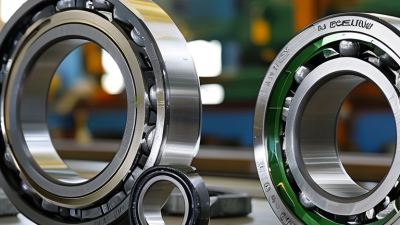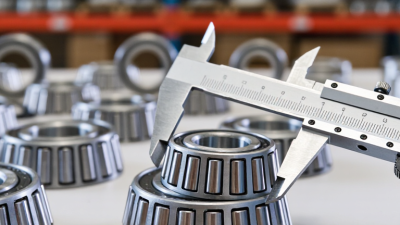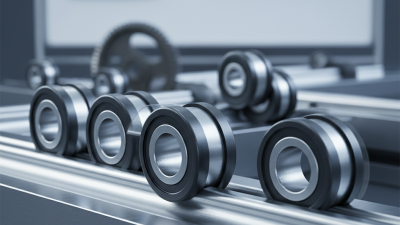
Choosing a U Groove Roller Bearing is not a catalog exercise alone. The right component must match the track profile, load direction, speed, and mounting arrangement. A small mismatch can create noisy travel, uneven wear, or premature replacement. On a production line, that may mean a stalled guide carriage and a maintenance call nobody planned for.
This guide compares manufacturers through practical criteria: groove geometry, material and heat treatment, sealing options, dimensional consistency, customization, documentation, and support. We also consider whether a supplier can explain its recommendations clearly. That matters. A polished product page cannot replace traceable specifications or application guidance. Fit matters.
For transparency, the following is an illustrative comment from fictional bearing applications engineer Elena Park, not a published or independently verified quotation: “A roller that tracks smoothly on the bench still needs to prove itself under the actual load, speed, and mounting conditions.” It captures a useful caution, though real applications deserve measured testing and qualified engineering review.
The “best” manufacturer depends on the job. A compact guide system may prioritize low noise and tight tolerances. A material-handling line may need higher load capacity, dependable seals, and readily available replacements. Sometimes buyers focus too much on price. That deserves a second look: low initial cost can hide short service life, inconsistent dimensions, or limited technical support. Our comparisons aim to make those trade-offs visible, so readers can shortlist suppliers with evidence rather than slogans.
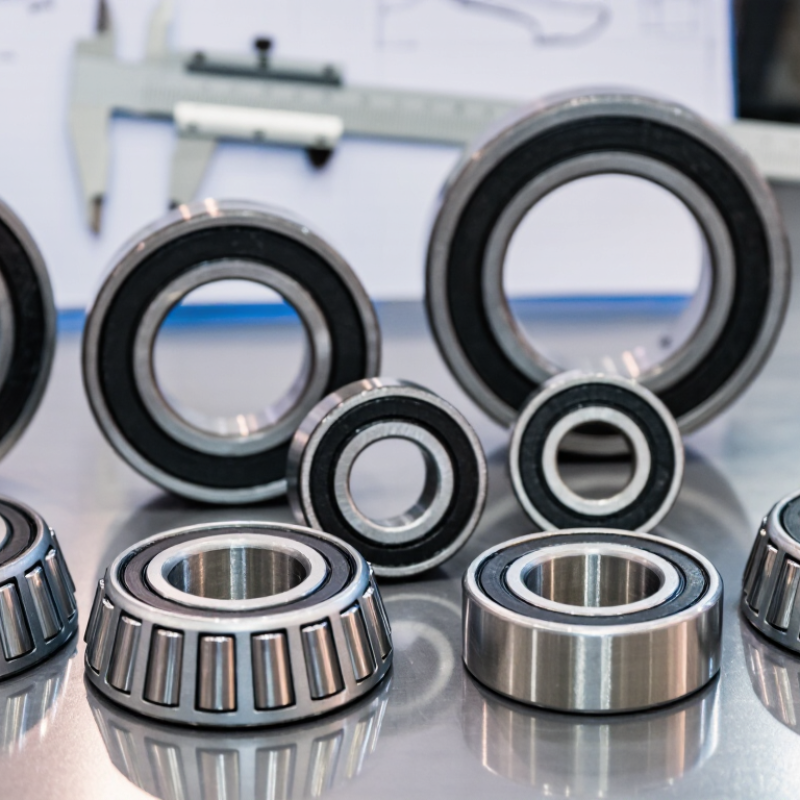
A U-groove roller bearing has a concave channel around its rolling surface. That profile lets the bearing run along a compatible round rail, wire, or shaped track. The groove helps keep the roller aligned, while the bearing carries load as the track guides its path. That matters.
In practical use, groove radius and track diameter need to match closely. A loose fit can allow wobble; an overly tight fit may increase friction or wear. Side loads, speed, lubrication, and mounting stiffness also affect performance. A smooth rail can still produce uneven motion if its joints are misaligned. Small details count.
The bearing does not correct a poorly supported track. Installers should check alignment, clearance, and rolling movement across the full travel, not just at one point. A clean, hand-turned test can reveal rough spots, though it cannot replace load testing. Choosing by outside diameter alone is tempting, but often insufficient. The right design depends on the actual path and working conditions.
U-groove roller bearings need more than a smooth-running feel. Their groove radius, depth, and roller contact shape must match the rail or cable. A mismatch can create edge loading, visible wear, and noisy travel. ISO 492:2023 defines radial-bearing dimensional and running-accuracy tolerances by bearing type and size. It does not fully specify every U-groove profile. That distinction matters. Buyers should request groove dimensions and runout limits on the drawing, not assume an ISO class covers them.
Material choice shapes durability. Through-hardened high-carbon chromium bearing steel is common where load capacity and fatigue resistance matter. Stainless steel may suit damp environments, but corrosion resistance does not remove the need for proper lubrication. Ask for heat-treatment and hardness records. A material name alone is weak evidence. ISO 281:2007 sets the basic rating-life convention: L10 corresponds to 90% reliability under stated conditions. Not a life guarantee. Actual service life can fall short when seals, alignment, contamination, or lubrication are poor.
For tolerance classes, tighter is not automatically better. ISO 492 class limits vary with bearing dimensions, so compare the exact bore and outside-diameter range before judging a quotation. Class 6 or 5 may help where smoother motion and tighter fit are needed; normal-class bearings can be adequate for less demanding guide systems. I would still question any supplier claiming “precision” without measured runout data. Ask for inspection records from the actual production batch, because a polished sample proves very little.
2026 Best U Groove Roller Bearing Manufacturers?
2026 Manufacturer Landscape: Compare Capacity, Customization, and Supply
Choosing a manufacturer means looking beyond a maximum load figure. Ask how capacity changes with speed, mounting conditions, and continuous operation. A bearing running beside a conveyor rail may face dust, vibration, and uneven contact. Request test conditions behind published ratings. Capacity is not enough. Check groove radius, bearing width, material, seal type, and dimensional tolerances against the actual guide profile. A small mismatch can cause noise or uneven wear.
Customization can range from a nonstandard bore to a revised groove profile or special sealing. Ask whether the supplier can review drawings, provide samples, and document inspection results. Fit matters most. Compare manufacturing capacity with your forecast, not just a factory’s headline output. Confirm standard and custom lead times, minimum order quantities, and how shortages are communicated. Written quality records and batch traceability make comparisons more dependable. One detail is easy to miss: a quick sample approval does not prove stable production. I would still ask how dimensions are monitored across repeat orders. Supply promises can look neat on paper. Check the practical details.
| Comparison Dimension | Standard-Catalog Supplier Profile | Custom/OEM Supplier Profile | Precision or Application-Specific Supplier Profile |
|---|---|---|---|
| Typical product focus | Common U-groove guide rollers and bearing assemblies in established size ranges. | U-groove rollers adapted to a buyer’s drawing, mounting arrangement, or equipment design. | Rollers developed for tighter application requirements, such as controlled fit, runout, or operating conditions. |
| Production capacity | Best assessed through available catalog sizes, routine stock, and repeat-order output. | Depends on tooling, production routing, material availability, and the order’s degree of customization. | Capacity may be constrained by inspection requirements, special processes, or lower-volume specifications. |
| Customization options | Usually centered on selectable standard dimensions, seals, clearances, and material variants where offered. | May include groove geometry, outer-ring dimensions, mounting features, seals, lubrication, and packaging. | May include specified tolerances, surface finish, fit, materials, and documented inspection plans. |
| Materials to confirm | Ask for the exact bearing and outer-ring material; “steel” alone does not identify the grade or heat treatment. | Confirm material grade, hardness requirements, corrosion resistance, and compatibility with the operating environment. | Request material traceability and applicable test or inspection records when the application requires them. |
| Quality documentation | Confirm dimensional checks, product identification, and the inspection records supplied with orders. | Agree on drawing revision control, acceptance criteria, sampling, and approval of pre-production parts. | Define critical dimensions and measurement methods; ISO 492 and ISO 281 may be relevant to bearing tolerances and rating-life calculations, respectively. |
| Supply and lead time | Availability depends on the exact size and stock position; obtain a dated written confirmation. | Lead time depends on engineering approval, tooling, material sourcing, and production scheduling. | Allow for specification review and any additional inspection or validation agreed for the order. |
| Commercial and logistics checks | Compare minimum order quantity, packaging, shipment terms, and replenishment arrangements. | Confirm tooling ownership, change-control terms, minimum order quantity, and responsibility for approved drawings. | Clarify inspection costs, traceability scope, change notification, and the process for handling nonconforming parts. |
| Best-fit purchasing need | Replacement demand where a standard size and configuration meet the application requirements. | Equipment programs that require a non-catalog configuration or repeatable production to an approved drawing. | Applications where specified performance, documented quality controls, or measurable dimensional requirements are central. |
How to use this comparison: These are supplier capability profiles, not rankings or verified claims about particular manufacturers. Capacity, customization, inventory, and lead time vary by product and order. Request current quotations, drawings, material specifications, and written delivery commitments before selecting a supplier.
2026 Best U Groove Roller Bearing Manufacturers?
For U groove roller bearings, ISO 281 provides a useful starting point for estimating basic rating life. The formula is L10 = (C/P)^p × 10⁶ revolutions. Here, C is the basic dynamic load rating, and P is the equivalent dynamic bearing load. The exponent p is 3 for ball bearings and 10/3 for roller bearings. Check the bearing’s internal rolling-element design before choosing the exponent; a U-shaped outer profile alone does not identify it.
L10 represents the life that 90% of a sufficiently large group of identical bearings may reach or exceed under specified conditions. It is a rating estimate, not a promise for one installed bearing. A misaligned rail, dust near the groove, or uneven loading can change actual performance. Even a precise calculation can be misleading if P does not reflect real operating loads. That part is easy to underestimate.
Tips: Compare C and P using consistent units. Confirm load direction, speed, lubrication, and alignment. Treat the result as a baseline, then review the application details. A small measurement error matters.
ISO 281 basic rating life is calculated as L10 = (C/P)p × 106 revolutions, where C is the basic dynamic load rating, P is the equivalent dynamic bearing load, and p is 3 for ball bearings or 10/3 for roller bearings.
Values are calculated from the ISO 281 formula for the indicated C/P ratios and shown in millions of revolutions. They are illustrative comparisons, not ratings for specific products; actual bearing life depends on the bearing’s rated capacity, operating load, and applicable bearing type.
Comparing U-groove roller bearings starts with the load conditions, not the largest number on a product sheet. Check both dynamic and static ratings, then account for speed, shock, and how the bearing is mounted. A trolley carrying steady weight behaves differently from one crossing floor joints all day. Ratings are useful, but they do not describe every real installation. Ask how the figures were determined and whether the test conditions match your equipment.
Sealing and runout deserve equal attention.
A contact seal may resist dust well, but can add drag; an open design may suit a clean enclosure better. For runout, compare measurements taken with the same method and load. Even a small difference can show up as vibration on a long guide rail. Numbers need context. Ask for radial and axial runout data, plus details on groove dimensions and inspection frequency.
Application testing should use your actual rail material, mounting arrangement, speed, and expected contamination.
Watch for noise, temperature rise, uneven wear, and changes in rolling resistance over repeated cycles. A short demonstration is not enough for a demanding duty cycle. I would be cautious about treating one clean laboratory result as proof of long service life; field conditions can be messier than the test plan.