Leave Your Message

10 Best Deep Groove Ball Bearings for Global Buyers

Choosing among the 10 best deep groove ball bearings takes more than comparing prices or catalog dimensions. A bearing may look identical on a screen, yet perform differently under heat, vibration, or continuous operation. Buyers should check bore size, outside diameter, width, load ratings, speed limits, seal type, and clearance. Small details matter. A 6205 bearing with the wrong clearance can run hot, shorten service life, or create unwanted noise.

Richard Stribeck’s research helped establish the study of friction in bearings. A concise paraphrase of its practical lesson is: “Friction changes with load, speed, lubrication, and surface condition.” This is not a verified verbatim quotation. It is a useful reminder for buyers comparing bearing specifications. A deep groove ball bearing can support radial loads and moderate axial loads, but its suitability depends on the application. Motor speed, shaft fit, lubricant, dust exposure, and duty cycle all deserve attention.

This guide compares options for global buyers, including common sizes, materials, seals, and sourcing considerations. It also points to details that are easy to overlook, such as traceable documentation and consistent quality between batches. A polished product page is not proof of performance. Ask for clear specifications, and verify that they match the machine. There is no perfect choice for every buyer; sometimes the listed “best” option is simply the wrong fit for a particular operating condition.
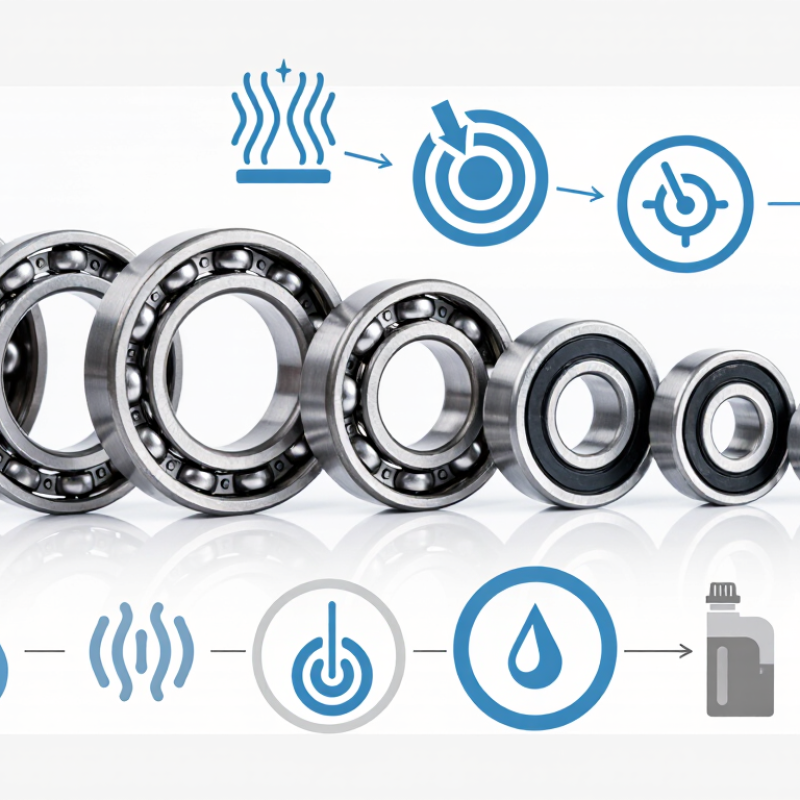
10 Best Deep Groove Ball Bearings for Global Buyers

Deep Groove Ball Bearings: Structure, Contact Geometry, and Typical Applications

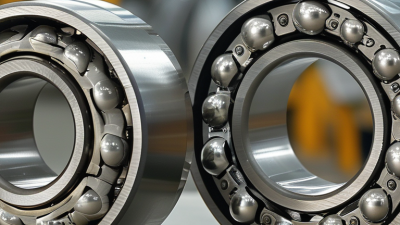
Deep groove ball bearings contain inner and outer rings, precision-ground raceways, balls, and a cage that keeps the rolling elements spaced. Their continuous, relatively deep grooves guide the balls during rotation. Simple in appearance.

Under radial load, contact forms across a narrow curved zone; axial load shifts this contact toward one side of each groove. The contact angle changes with clearance, fit, and operating load, so it is not a fixed performance value. Standard designs generally support radial loads and moderate axial loads in either direction. Heavy thrust, however, can shorten service life.

This geometry suits electric motors, ventilation fans, small pumps, gearboxes, and conveyor rollers, where steady rotation and compact installation matter. In a motor, a bearing may run near warm windings and experience vibration during starts.

Seal type, internal clearance, lubrication, speed, and shaft alignment all affect performance. A sealed unit can retain grease and exclude dust, though its seals may add friction. An open bearing allows relubrication but needs cleaner surroundings. Selection is not just a bore-size match. Check load direction, temperature, duty cycle, and mounting tolerances against equipment data. A small misalignment can matter more than expected. Calculations help, but actual operating conditions may differ, so inspection remains useful.
ISO 15 Boundary Dimensions and Their Role in Bearing Interchangeability

10 Best Deep Groove Ball Bearings for Global Buyers
ISO 15 Boundary Dimensions and Their Role in Bearing Interchangeability

ISO 15 specifies boundary dimensions for radial bearings, including bore, outside diameter, and width. For buyers comparing deep groove ball bearings, these measurements provide a shared reference. A matching size can often fit the same shaft and housing envelope. That is useful. A warehouse team can compare drawings before replacing a bearing instead of relying on appearance or a quick ruler check. But matching dimensions are only the first check.

ISO 15 does not guarantee equal internal clearance, load rating, speed capability, seals, cage design, or noise performance. Two bearings with identical boundary dimensions may behave differently under heat or heavy radial load. Check the full bearing designation, tolerance class, and technical data, then verify shaft and housing fits against the equipment drawing. A tight housing fit can reduce operating clearance; a loose fit can let the outer ring creep. Small differences matter. Treating the standard size as the whole answer is a shortcut worth questioning. For global purchases, compare dimensional records with the original drawing before installation.

10 Common Deep Groove Ball Bearings: ISO 15 Boundary Dimensions

Dimensions are shown in millimeters: bore diameter (d), outside diameter (D), and width (B). These common 6000-series sizes illustrate how ISO 15 boundary dimensions support dimensional interchangeability. Matching boundary dimensions alone does not guarantee full interchangeability; buyers should also verify tolerances, internal clearance, seals, cage design, and load ratings.

ISO 281 Rating Life: Understanding L10 at 90% Reliability

When comparing deep groove ball bearings, buyers often encounter the L10 life figure. ISO 281 defines basic rating life as the number of revolutions that 90% of a sufficiently large group of identical bearings can complete before fatigue develops. It is a statistical rating, not a promised service life for one bearing.

For ball bearings, the basic calculation is L10 = (C/P)³ million revolutions. C is the bearing’s basic dynamic load rating; P is its equivalent dynamic load.

For example, if C is 10 kN and P is 2 kN, the calculated L10 is 125 million revolutions. At a steady 1,500 rpm, that equals roughly 1,389 operating hours. Real machines are less tidy.

The 90% reliability level assumes defined operating conditions. Misalignment, shock loads, poor lubrication, or contamination can shorten service life. ISO 281 also provides methods for adjusted rating life, including reliability and operating-condition factors. Check the load and speed estimates against actual duty, not just a catalogue value. A neat calculation can still mislead. And L10 does not mean the other 10% will fail at the same moment; it describes a population’s fatigue-life distribution, not an individual bearing’s countdown.

10 Deep Groove Ball Bearing Types Compared by Load, Speed, and Sealing

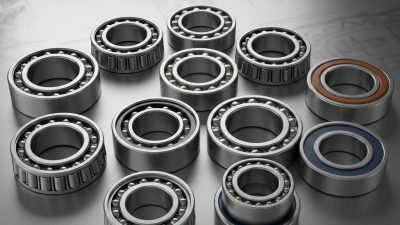
Deep groove ball bearings differ less by name than by their trade-offs. Open single-row designs run with low friction but need clean, lubricated surroundings. Shielded versions help block larger particles, while contact-sealed versions offer stronger contamination protection and usually add drag. Non-contact seals can reduce friction, though their protection depends on operating conditions. Fit matters.

Double-row bearings support greater radial loads and some axial load, but need more space. Miniature bearings suit compact instruments; their small balls limit load capacity. Thin-section designs save space and weight, yet demand careful shaft and housing alignment. A slight misalignment can spoil an otherwise suitable choice.

Stainless-steel versions resist corrosion in damp settings, but material choice alone does not determine service life. High-precision types suit faster rotation when mounting and lubrication are controlled. Full-complement designs carry more load in a given space, but typically sacrifice speed because of increased ball contact. Flanged types simplify locating a bearing in a plate; the flange does not improve sealing. Real installations are messier. A dusty conveyor may favor sealed bearings, while a clean motor may benefit from lower-drag shields. Compare load, speed, temperature, and maintenance intervals together; catalog limits rarely tell the whole story.

10 Best Deep Groove Ball Bearings for Global Buyers — 10 Deep Groove Ball Bearing Types Compared by Load, Speed, and Sealing

Bearing type Typical construction Load capability Speed capability Sealing and lubrication Typical use and selection note
1. Open single-row One row of balls; no integral shields or seals. Standard radial capacity for its size; can also carry limited axial load in either direction. Very high when correctly lubricated and fitted. Open to the housing environment; needs appropriate external protection and lubrication. Suitable for clean, protected assemblies or applications with circulating oil. Not ideal where dust or moisture can enter.
2. One-shield (Z) One non-contact metal shield on one side. Comparable to an open bearing of the same size and design. Very high; the non-contact shield adds little friction. Helps retain grease and block larger particles on one side; not a contact seal or a watertight barrier. Useful when one side needs basic protection and the other side remains accessible for relubrication or oil supply.
3. Two-shield (2Z / ZZ) Non-contact metal shields on both sides. Comparable to an open bearing of the same size and design. Very high; typically lower friction than contact-sealed versions. Usually supplied grease-lubricated; shields help retain grease but provide limited protection against fine dust and liquids. A common choice for electric motors and other clean environments where low friction and low maintenance are priorities.
4. One-contact-seal (RS / 2RS, one side) Elastomer contact seal on one side; the opposite side is open or otherwise specified. Comparable to a standard bearing of the same size, subject to the seal arrangement. High, but usually below a comparable open or shielded bearing because seal contact adds friction. Better protection against dust and moisture on the sealed side; check seal material and temperature limits. Consider where one-sided contamination protection is needed. Confirm the exact suffix because designations vary by supplier.
5. Two-contact-seal (2RS) Elastomer contact seals on both sides. Comparable to a standard bearing of the same size, subject to seal design and operating conditions. Moderate to high; seal friction and heat can limit speed compared with non-contact designs. Good general protection against dust and splashes; normally grease-lubricated for life, but not automatically suitable for immersion or pressure washing. A practical option for general machinery exposed to contamination. Check the specified speed, grease, and seal temperature limits.
6. One non-contact-seal (RZ, one side) Low-friction, non-contact seal on one side; opposite side is open or otherwise specified. Comparable to a standard bearing of the same size and design. Very high relative to contact-sealed versions, subject to the bearing and lubricant limits. Reduces grease loss and offers light contamination protection; generally less effective than a contact seal against liquids and fine contaminants. Useful when low friction matters and contamination is limited. Verify the supplier’s exact seal construction and suffix definition.
7. Two non-contact seals (2RZ) Low-friction, non-contact seals on both sides. Comparable to a standard bearing of the same size and design. Very high relative to contact-sealed versions, subject to operating conditions. Helps retain grease while maintaining low friction; protection against liquid ingress is limited compared with contact seals. Consider for clean, high-speed applications where a shield alone may not provide the desired grease-retention arrangement.
8. Stainless-steel deep groove Rings and rolling elements made from specified stainless bearing materials; available open, shielded, or sealed. Often lower than a comparable standard bearing-steel design; verify the published dynamic and static ratings. Depends on material, lubrication, clearance, and sealing; do not assume standard-steel speed ratings apply. Material improves corrosion resistance, but does not make every design corrosion-proof; seal and lubricant choices still matter. Commonly considered for damp or washdown-prone environments. Match the stainless grade and seals to the actual chemicals and cleaning process.
9. Hybrid ceramic Steel rings with ceramic balls; available in different cage and seal arrangements. Application-dependent; ceramic balls do not automatically increase the bearing’s load rating. Can support high-speed operation in suitable designs; allowable speed depends on the complete bearing, fit, and lubrication. Sealing depends on configuration. Lubrication is still important unless a specific application is engineered otherwise. Used in selected high-speed or electrically sensitive applications. Confirm load ratings, electrical requirements, and mounting conditions.
10. Double-row deep groove Two rows of balls in a single bearing; available in configurations that vary by manufacturer and application. Can carry greater radial load than a comparable single-row design when the geometry and dimensions are suitable; check catalog ratings. Generally lower than a comparable single-row design; use the published limiting or reference speed. Sealing and lubrication options vary; do not assume a standard seal or grease fill. Consider where space is restricted and higher radial capacity is needed. Confirm axial-load suitability and mounting requirements.

Comparison guide: load and speed descriptions are qualitative, not guaranteed ratings. Actual capacity and allowable speed depend on bearing size and internal design, clearance, cage, precision, fit, temperature, lubrication, and operating conditions. Check the specific bearing manufacturer’s catalog and confirm suffix conventions before ordering.

Global Buyer Checks: ISO 492 Tolerances, Lubrication, and Traceability

When comparing the 10 best deep groove ball bearings for global sourcing, treat ISO 492 as a measurable starting point, not a complete quality guarantee. The standard specifies dimensional and running accuracy tolerances. Match the required class to shaft fits, housing seats, and operating speed. Check sample bore and outside diameter with calibrated instruments. Small differences matter. A bearing that fits when cold may run hot if installation clearances are overlooked.

Lubrication should suit the actual speed, load, temperature, and surroundings. Ask for the grease type and fill quantity, and check storage guidance before placing stock on a shelf. More grease is not always better; excess can increase heat at speed. Traceability matters too. Request clear lot identification and inspection records linking each shipment to its production batch. A generic certificate may not answer questions about a specific delivery. In practice, paperwork can be incomplete, so verify sample labels against the documents.

Tip: Compare tolerance results, lubricant details, and batch records on the same purchase checklist. Keep one labeled sample from each received lot. It takes little space, but can help when a fit or noise issue appears later.