Leave Your Message
China’s position in automotive manufacturing makes its Wheel Hub Bearing Assembly sector increasingly important. OICA reported 93.5 million vehicles produced worldwide in 2023. China contributed more than 30 million units, creating substantial demand for reliable hub systems.
CAAM reported China produced 31.28 million vehicles in 2024. New-energy vehicles represented about 12.87 million units. These figures point toward growing requirements for low-friction bearings, precise sealing, and quiet operation. However, market size estimates vary because some reports include wheel bearings, while others include complete hub modules. That difference matters.
Peter Jost, the renowned tribology expert, defined the field clearly: “Tribology is the science and technology of interacting surfaces in relative motion.” His statement explains why bearing quality depends on more than steel hardness. Raceway finishing, grease stability, flange accuracy, and contamination control all influence service life.
This guide examines China’s leading Wheel Hub Bearing Assembly manufacturers through practical evidence. It considers production capability, testing equipment, OEM experience, aftermarket coverage, and quality-system certifications. It also reviews details buyers can verify, including runout records, torque measurements, sealing tests, and batch traceability.
A polished website is not enough. Nor is a low quotation.
Some manufacturers publish impressive specifications but provide limited test evidence. That weakness deserves attention. Supplier rankings are therefore not perfectly objective. They should be checked against samples, audit results, warranty terms, and documented field performance. SKF’s technical literature and annual reporting repeatedly emphasize reliability, condition monitoring, and lifecycle value. Those principles provide a useful benchmark when comparing China-based suppliers.
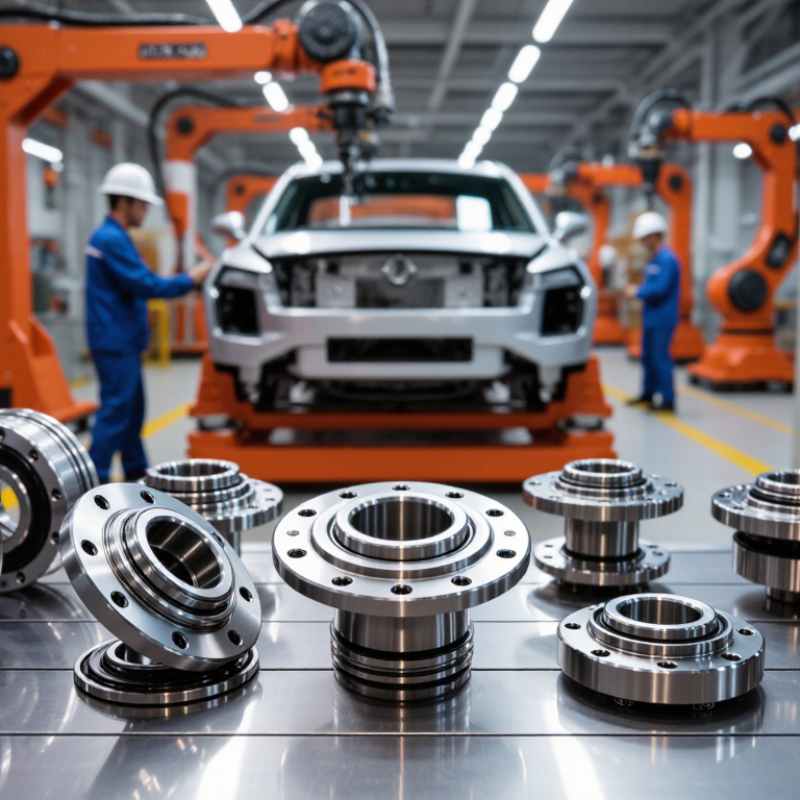
China Top Wheel Hub Bearing Assembly Manufacturers
Wheel Hub Bearing Assemblies: Definition, Structure, and Main Functions
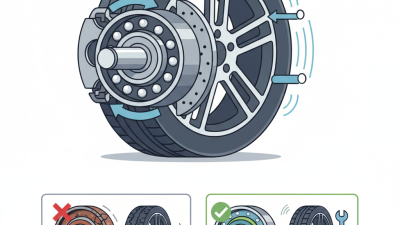
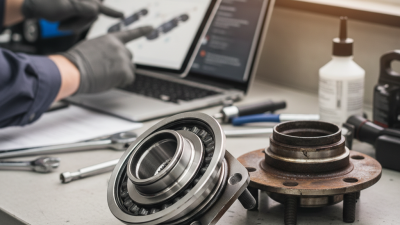
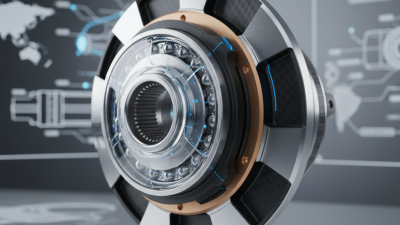
A wheel hub bearing assembly combines a bearing, wheel hub, seals, and sometimes an encoder ring. It connects the wheel to the suspension and allows smooth rotation. The bearing usually contains inner races, outer races, rolling elements, and a lubricated cage. The hub flange provides the mounting surface for the wheel and brake disc. Seals help keep water, dust, and road debris away from the rolling tracks. Some assemblies also include an integrated ABS sensor ring. Small details matter. A slight dimensional error can create noise, vibration, or uneven tire wear.
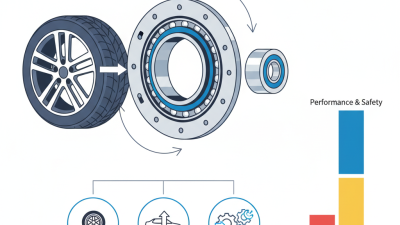
Its main functions are supporting radial and axial loads, maintaining wheel alignment, and reducing rotational friction. During production, experienced manufacturers control steel quality, heat treatment, grinding accuracy, grease volume, and sealing pressure. Traceability records should cover raw materials and inspection results. Fatigue testing and rotational noise checks provide useful evidence of reliability. Workshop inspections often reveal a difficult truth: fitting conditions are less tidy than engineering drawings. Incorrect torque, damaged seals, or contaminated tools can shorten service life. The assembly is strong, but not careless-proof.
Tips: Check flange runout before installation. Use the specified torque. Never strike the bearing directly. Compare rotation smoothness and sensor clearance after fitting. Ask manufacturers for dimensional reports, endurance-test data, and batch traceability. A low price deserves closer questions.
| Data Dimension | Component or Specification | Typical Design or Material | Main Function | Key Technical Considerations |
|---|---|---|---|---|
| Definition | Wheel Hub Bearing Assembly | Pre-assembled wheel-end unit combining a bearing with a wheel hub or mounting flange | Supports the vehicle wheel and allows smooth rotation around the steering knuckle or axle | Usually supplied as a sealed, pre-lubricated assembly to simplify installation and reduce maintenance |
| Core Bearing Type | Single-row ball bearing | Hardened steel inner and outer rings with precision steel balls and a cage | Handles radial loads and moderate axial loads in compact applications | Common in lighter-duty wheel-end designs where space and weight are important |
| Core Bearing Type | Double-row angular-contact ball bearing | Two rows of balls arranged to resist radial and axial forces in both directions | Supports combined wheel loads, cornering forces, and braking loads | Provides higher stiffness and load capacity than a single-row bearing of similar outside diameter |
| Core Bearing Type | Tapered roller bearing | Conical rollers running between matching tapered raceways | Manages high radial loads and substantial axial loads generated during cornering and braking | Requires correct preload or endplay adjustment unless supplied as a permanently adjusted unit |
| Hub Structure | Wheel hub body | Forged or cast steel, or aluminum alloy with steel bearing interfaces | Provides the mounting interface for the wheel, brake rotor, and bearing assembly | Must maintain dimensional accuracy, concentricity, and sufficient resistance to fatigue |
| Mounting Interface | Wheel studs or bolt holes | Integrated studs, threaded holes, or a wheel flange with a specified bolt pattern | Secures the wheel to the hub | Hole pitch circle diameter, stud size, thread specification, and flange runout must match the vehicle design |
| Steering Interface | Flange or knuckle mounting points | Machined flange with bolt holes or a press-fit bearing interface | Connects the hub-bearing unit to the steering knuckle or axle carrier | Correct mounting torque and surface cleanliness are essential for alignment and service life |
| Sealing System | Integrated contact or non-contact seals | Elastomer sealing lips supported by metal or polymer seal components | Retains grease and prevents water, dust, and road contaminants from entering the bearing | Seal design must balance contamination resistance with low friction and acceptable operating temperature |
| Lubrication | Factory-filled grease | Long-life automotive bearing grease selected for temperature, load, and water resistance | Reduces friction, wear, and heat generation between rolling elements and raceways | Sealed assemblies are generally not intended for routine relubrication in service |
| Sensor Integration | Wheel-speed sensor encoder | Magnetic encoder ring integrated into or positioned beside the bearing seal | Provides wheel-speed information to anti-lock braking and vehicle stability systems | Encoder orientation, air gap, sensor compatibility, and magnetic pole arrangement must be correct |
| Load Direction | Radial load | Load acting generally perpendicular to the bearing rotation axis | Supports vehicle weight and vertical road forces | Load rating is influenced by vehicle mass, wheel offset, tire characteristics, and road conditions |
| Load Direction | Axial load | Load acting parallel to the bearing rotation axis | Resists cornering, braking, steering, and side-impact forces | Angular-contact and tapered-roller designs are particularly suitable for combined radial and axial loads |
| Precision Requirement | Rotational runout | Controlled deviation between the rotating hub and its reference axis | Helps maintain stable wheel rotation and consistent brake operation | Excessive runout may contribute to brake pulsation, vibration, uneven wear, or steering shake |
| Performance Rating | Dynamic load rating | Calculated bearing capacity used to estimate fatigue life under rotating load | Helps engineers select a bearing suitable for expected operating conditions | Actual service life also depends on contamination, installation quality, preload, temperature, and impact loads |
| Operating Environment | Temperature and contamination exposure | Road-facing assembly exposed to water, salt, dust, vibration, and temperature cycling | Maintains wheel support and rotation under changing road conditions | Material selection, sealing performance, corrosion protection, and grease stability are critical |
| Main Functions | Wheel support and rotation | Rigid hub-bearing connection between the rotating wheel and stationary suspension structure | Transfers vehicle weight and driving, braking, and cornering forces while allowing low-friction rotation | Proper fit, torque, preload, and alignment are necessary for safe and reliable operation |
| Common Wear Symptoms | Noise, vibration, looseness, or uneven rotation | May result from fatigue, contamination, seal damage, incorrect installation, or impact damage | Indicates that inspection or replacement may be required | Diagnosis should distinguish bearing problems from tire, brake, suspension, and driveline issues |
| Installation Practice | Torque-controlled installation | Fasteners tightened according to the vehicle or assembly specification | Maintains correct clamping force and bearing operating clearance | Impact tools, reused single-use fasteners, or improper pressing force can cause premature failure |