2026 Best Deep Groove Ball Bearing Suppliers?
Choosing a Deep Groove Ball Bearing supplier in 2026 is not just a price comparison. The bearing market is large, but broad market figures do not tell buyers which factory can meet a particular tolerance, load, or delivery schedule. Grand View Research valued the global bearing market at USD 126.4 billion in 2023 and projected an 8.3% compound annual growth rate from 2024 to 2030. That estimate covers many bearing types, not deep groove ball bearings alone. Context matters.
For procurement teams, small details can have real consequences: a bearing running hot in a motor, inconsistent noise levels, or a shipment arriving without clear traceability records. A supplier’s technical documentation, quality controls, material specifications, and ability to maintain repeatable production deserve close review. ISO 281 provides a recognized method for calculating dynamic load ratings and rating life, though real service life also depends on lubrication, contamination, installation, and operating conditions. The standard is a useful reference, not a guarantee.
A catalogue can look convincing. Verification takes more work. This guide examines potential suppliers through practical criteria, including product range, manufacturing capabilities, certifications, export experience, and support after the sale. It also highlights questions buyers can ask before requesting samples or placing an order. No supplier is best for every application; a low quote may suit one project and create avoidable risk in another. Readers should confirm current specifications and supplier credentials directly, since capabilities and commercial terms can change.
Understanding Deep Groove Ball Bearings and Their Applications
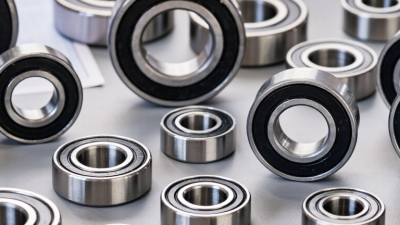
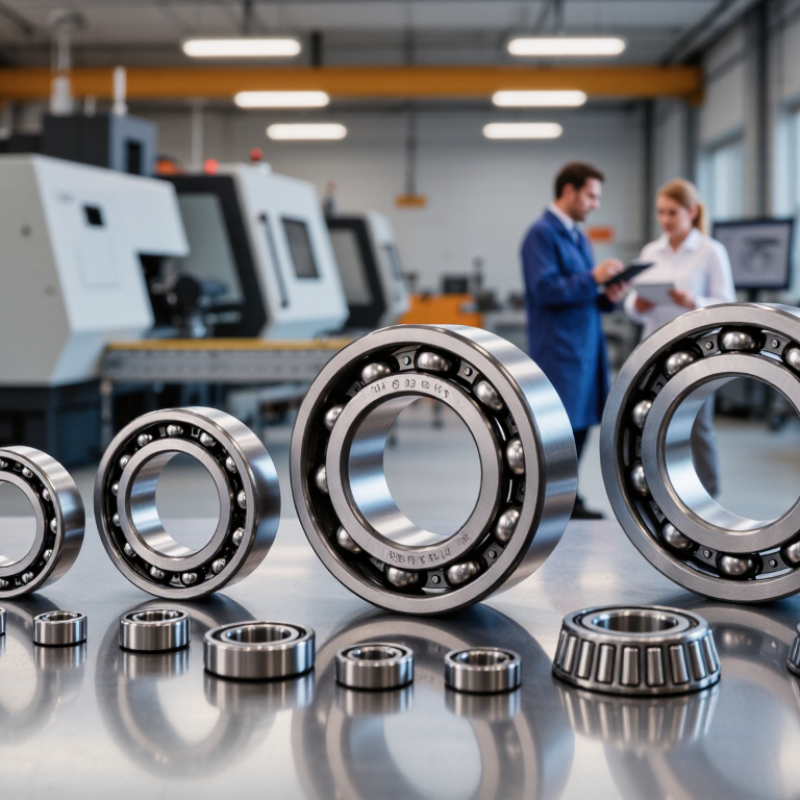
Deep groove ball bearings are widely used because their simple design supports reliable rotation with low friction. Their inner and outer raceways guide balls around a continuous groove. They mainly carry radial loads and can also handle moderate axial loads in either direction. Common applications include electric motors, pumps, fans, conveyors, and household appliances. Small parts. Big consequences.
A bearing in a ventilation fan may turn thousands of times each hour, while dust and heat slowly affect its performance. Correct shaft fit, alignment, clearance, and lubrication all matter. Selection should consider bore and outside diameter, operating speed, load, temperature, sealing, and expected service life. A sealed bearing can help keep contaminants out, but its seal may add friction and retain heat. One detail is easy to overlook: grease choice can change the result. Bearings with matching dimensions are not automatically interchangeable. For dependable sourcing, request clear specifications, load ratings, material details, and inspection records. Even then, actual operating conditions deserve a second look; catalog figures cannot describe every machine.
Key Criteria for Evaluating Suppliers in 2026
For a 2026 deep groove ball bearing purchase, compare suppliers against the same technical specification. Check bore and outside diameters, clearance class, cage material, sealing option, and stated tolerance range. Ask how the bearing is intended to handle your speed, radial load, temperature, and lubrication conditions. A catalog match is not proof of application suitability.
Details matter. Request current datasheets, inspection records, and lot-level traceability, then confirm that documents match the quoted part. Ask how the supplier controls material, heat treatment, grinding, and final inspection. If quality-system certificates are offered, verify their scope and date rather than treating a logo as evidence. Sample inspection can reveal noise, rough rotation, or packaging damage before a larger order.
Delivery performance deserves equal scrutiny. Compare quoted lead times, stock availability, minimum order quantities, and procedures for handling specification changes. Ask for references from comparable applications where practical. Some supplier responses may be incomplete or overly polished; that is a reason to ask clearer questions, not to assume misconduct. Keep a simple evaluation sheet, score evidence rather than promises, and record any unresolved concern. The lowest price may still cost more if dimensions, documentation, or delivery do not fit your process.
Leading Deep Groove Ball Bearing Suppliers to Consider
A reliable deep groove ball bearing supplier should offer more than a broad size catalogue. Look for documented steel grades, heat-treatment controls, raceway finish measurements, and batch-level inspection records. Ask how suppliers verify radial clearance and vibration, and whether they can provide test results for the bearing’s intended speed and load. Ask for evidence. A polished brochure is not a quality system.
The U.S. Department of Energy’s Improving Motor and Drive System Performance sourcebook reports that motor-driven systems use about 68% of electricity consumed by U.S. industry. That figure does not mean bearings alone determine energy use, but it shows why friction, lubrication, and maintenance deserve attention. For life calculations, suppliers should explain assumptions against ISO 281, which defines methods for calculating dynamic load ratings and rating life. Check whether the proposed grease, operating temperature, and contamination controls match your actual equipment.
Strong suppliers also make traceability practical: clear lot codes, consistent lead times, and prompt technical responses when a test result looks unusual. Request sample inspection reports, not just certificates. Small details matter. A supplier may meet catalogue tolerances yet still be a poor fit for a dusty conveyor or a frequently washed pump. I would compare two or three candidates using the same drawing, duty cycle, and acceptance criteria; otherwise, the comparison can look more precise than it is.
2026 Best Deep Groove Ball Bearing Suppliers? — Standard 6000-Series Dimensions
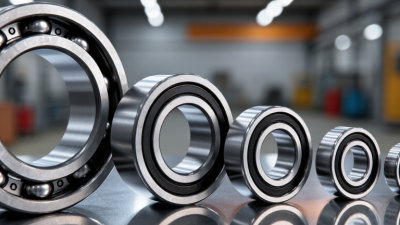
Compare nominal bore and outside diameters when evaluating supplier catalogs. Dimensions shown are in millimeters for common 6000-series bearings; confirm the exact specification and tolerances with the supplier before ordering.
Comparing Supplier Quality, Capacity, and Service
A deep groove ball bearing supplier should be compared on evidence, not catalog language. Ask for inspection data covering dimensions, radial runout, clearance, and noise levels. Check whether reports identify the production lot and measurement method. A sample that turns smoothly by hand is useful, but it cannot replace documented testing. Small details matter.
Capacity is more than a large monthly output figure. Ask how the supplier handles your order size, seasonal peaks, and repeat batches. Confirm typical lead times and what happens when a production line or raw material supply is delayed. If possible, compare samples from separate lots. Consistency often tells you more than one excellent sample. Capacity claims can be hard to verify, so build in questions.
Service shows up after the quotation. Notice how quickly technical questions receive clear answers, and whether the team can explain fit, clearance, lubrication, and packaging choices. Request a written process for handling defects, including response times and traceability. A low price may still be attractive, but only if inspection, delivery, and communication are dependable. Some buyers overlook these practical checks; I would not treat a polished presentation as proof.