Leave Your Message
Choosing Steel Ball Bearings is not simply a matter of matching a shaft diameter. Load, speed, operating temperature, available space, and lubrication all shape the choice. A bearing running inside a dusty packaging line faces different demands from one supporting a quiet electric motor. Small details matter. A mismatch may mean excess heat, vibration, or early wear.
Reliable selection starts with measurable requirements. ISO 281:2007 defines bearing rating-life calculations; for ball bearings, basic rating life follows a cubic relationship between dynamic load rating and applied load. Its L10 life corresponds to 90% reliability under stated conditions, not a guaranteed service life for every installation. SKF’s Bearing Damage and Failure Analysis guide also describes lubrication problems, contamination, and mounting errors as common sources of bearing damage. These references help frame decisions, but actual results depend on fit, alignment, maintenance, and the working environment.
Before comparing products, identify radial and axial loads, shaft dimensions, target speed, and the lubricant available. Then check internal clearance, seal type, material, and manufacturer load ratings. A sealed bearing may help keep dust out, yet create unwanted heat at higher speeds. There is no universal winner. Even a technically sound selection can disappoint if installation is rough or maintenance assumptions are unrealistic. Treat calculations as a starting point, verify critical choices with manufacturer data, and review operating conditions before finalizing the bearing.
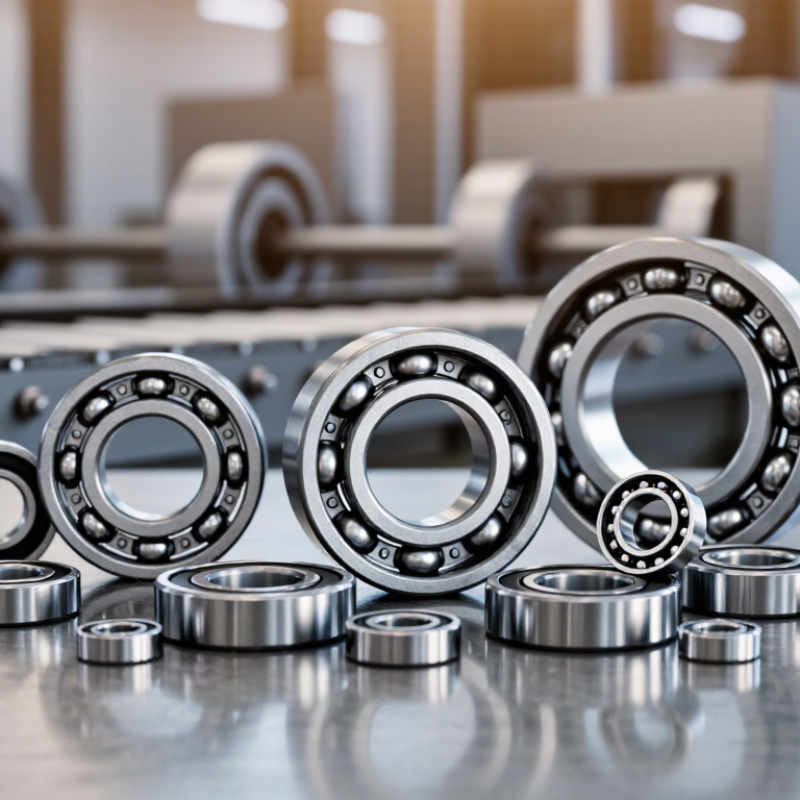
Before choosing a steel ball bearing, define the conditions it must handle. Record radial and axial loads, shaft speed, operating temperature, duty cycle, and expected service life. Note whether the bearing faces dust, water, washdown, vibration, or frequent starts. A bearing running beside a warm motor in a dry, clean housing needs different protection from one exposed to grit and moisture. Small details matter.
Use load and speed data to compare options, rather than relying on shaft size alone. ISO 281:2007 defines basic rating life, L10, as the life that 90% of a sufficiently large group of identical bearings are expected to reach or exceed under stated conditions. For ball bearings, its basic life calculation uses a load exponent of 3: doubling equivalent load can reduce calculated life to one-eighth. This is a useful estimate, not a promise; lubrication, contamination, alignment, and installation affect service life. ISO 15243:2017 also classifies rolling-bearing damage, helping teams investigate recurring failures.
Tips: Measure actual shaft speed and estimate peak load, not just normal operation. Keep a note of lubricant type and relubrication interval. If conditions are uncertain, say so; an early estimate may need revision.
| Operating Condition | What to Determine | Selection Guidance |
|---|---|---|
| Load type and direction | Identify whether the bearing will carry radial load, axial load, or a combination, and note any shock or vibration. | Deep-groove ball bearings are commonly used for radial loads and moderate axial loads in both directions. For substantial axial loads, consider a bearing type designed for thrust loading. Check both dynamic and static load ratings against the application loads. |
| Load magnitude and life | Estimate the equivalent bearing load, duty cycle, and required operating life. | Choose a load rating appropriate to the required life and reliability. For ball bearings, basic rating life is commonly calculated using L10 = (C/P)3 million revolutions, where C is the basic dynamic load rating and P is the equivalent dynamic bearing load. Actual life can vary with lubrication, contamination, installation, and operating conditions. |
| Speed | Record continuous and peak rotational speeds, acceleration, and the expected operating time at each speed. | Compare the application speed with the bearing’s allowable speed for its design, cage, lubrication, seals, and mounting. Higher speed can increase heat and lubricant demand; do not rely on a single generic speed limit. |
| Operating temperature | Determine the normal temperature, short-term peaks, ambient temperature, and heat from nearby components. | Confirm that the bearing, lubricant, seals, and cage materials are suitable for the full temperature range. Elevated temperatures can reduce lubricant life and may affect internal clearance and material properties. |
| Lubrication | Decide whether grease or oil is appropriate, and assess relubrication access and maintenance intervals. | Grease is often used where a compact, low-maintenance arrangement is desired. Oil may suit applications requiring heat removal or continuous lubricant supply. Use a lubricant with suitable viscosity and temperature characteristics, and avoid overfilling. |
| Contamination and moisture | Assess exposure to dust, particles, water, washdown, or other contaminants. | Sealed or shielded configurations can help retain lubricant and limit contaminant entry, but their suitability depends on speed, temperature, and sealing requirements. In severe contamination, consider additional housing seals and an appropriate maintenance plan. |
| Shaft and housing fits | Specify shaft and housing dimensions, materials, operating temperatures, and which ring rotates relative to the load. | Fit selection affects ring movement and internal clearance. A rotating ring under load commonly needs an interference fit; the correct fit depends on load, size, material, and temperature. Verify dimensions and tolerances before installation. |
| Internal clearance and preload | Consider fit-related clearance reduction, temperature differences, alignment, and stiffness needs. | Choose internal clearance to suit the assembled and operating condition. Excessively small clearance can increase friction and heat; excessive clearance can reduce stiffness and affect noise or accuracy. Preload should be used only when the application design requires it. |
| Precision and runout | Set requirements for rotational accuracy, runout, vibration, and product quality. | Use the precision class appropriate to the machine and performance target. Tighter tolerances may be needed for precision spindles or measuring equipment, while many general-purpose applications use standard tolerances. |
| Installation and maintenance | Review available mounting space, assembly method, inspection access, and replacement interval. | Use suitable tools and apply mounting force to the ring being fitted; avoid transmitting force through the rolling elements. Keep components clean during installation and follow an inspection and lubrication schedule suited to the application. |