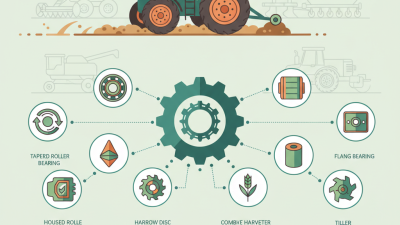
Agricultural Bearings are small components with a large operational responsibility. They support disc harrows, seeders, balers, combines, and irrigation equipment. In dusty fields, a poor seal can shorten service life within one season.
The OECD-FAO Agricultural Outlook 2024–2033 projects global agricultural production to grow by about 1.1% annually. Much of this growth must come from better productivity, not simply more farmland. The report highlights continuing pressure on yields, machinery efficiency, and resource management. Meanwhile, the UN World Population Prospects 2024 estimates that global population will continue rising toward approximately 9.7 billion by 2050. These trends make dependable agricultural machinery increasingly important.
Bearing selection is not merely a catalog exercise. Buyers must compare load capacity, operating speed, contamination resistance, mounting method, clearance, and lubrication access. Common choices include disc harrow bearings, flange bearings, spherical roller bearings, tapered roller bearings, and insert bearings with housings. CEMA’s European machinery outlook also shows how equipment demand responds to farm income, replacement cycles, and investment confidence. Those factors vary sharply between regions.
Field experience teaches a harder lesson. No bearing survives every condition. Mud, fertilizer dust, shock loading, and incorrect installation can defeat even premium products. This 2026 guide examines practical bearing types for global buyers, linking design features with real agricultural applications. It also recognizes an uncomfortable limitation: published market data often groups bearings within broader machinery categories. Therefore, technical specifications and verified supplier documentation deserve more weight than attractive market claims.
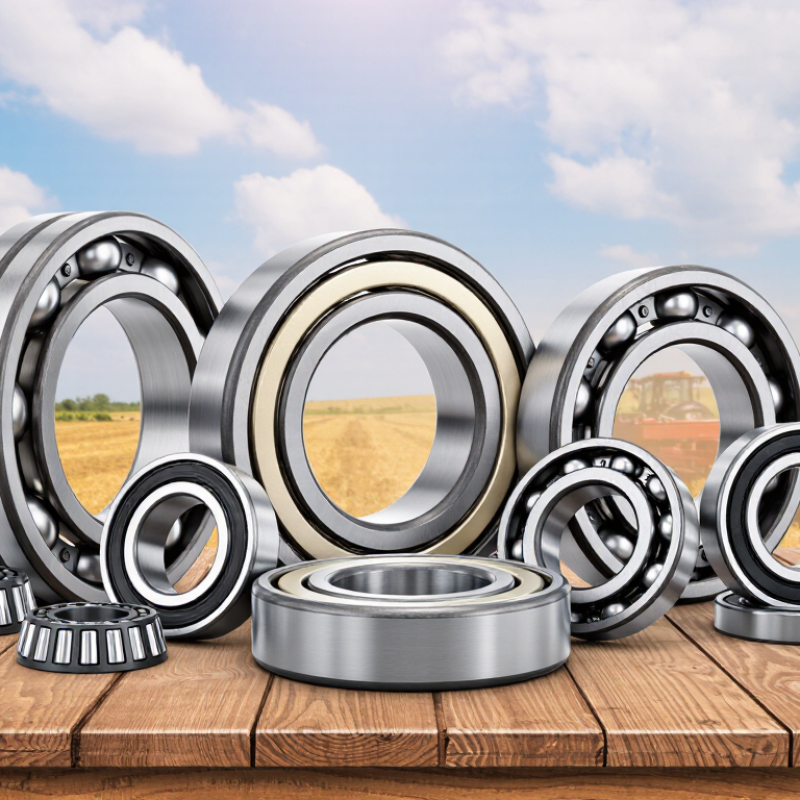
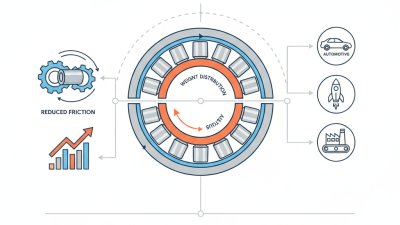
Agricultural bearings support rotating shafts in planters, combines, balers, and irrigation equipment. They reduce friction while carrying radial, axial, or combined loads. Common choices include deep-groove ball, spherical roller, tapered roller, and mounted insert bearings. Each type suits different shaft speeds, load patterns, and alignment conditions.
Farm machinery faces dust, mud, water, vibration, and sudden impacts. Effective seals and suitable clearance are therefore essential. Grease must resist washout and temperature changes. According to ISO 281:2007, bearing life calculations depend on load, speed, and dynamic load rating. Laboratory figures still need careful interpretation. Real fields are less tidy than test benches.
The OECD-FAO Agricultural Outlook 2024–2033 projects global agricultural and fish production to grow by about 1.1% annually. This expansion increases pressure on equipment uptime and maintenance planning. In practice, bearing selection should consider crop residue, cleaning routines, shaft misalignment, and seasonal storage.
A spherical roller bearing may tolerate misalignment better, while a tapered roller bearing handles combined loads effectively. Mounted bearings simplify replacement, but poor housing alignment can shorten service life.
Regular checks should examine noise, heat, grease leakage, looseness, and seal damage. Small warning signs matter. Yet maintenance intervals cannot be copied blindly from a catalogue. Soil, humidity, load cycles, and operator habits often change the result.

Agricultural machinery operates through dust, moisture, vibration, and uneven fields.
Bearing selection directly affects service life and machine uptime. Deep-groove ball bearings handle moderate radial loads in seeders, pumps, and small electric drives. Insert bearings fit prepared housings and tolerate minor shaft misalignment. Their sealed designs reduce daily lubrication work, although hardened seals can fail unexpectedly.
Spherical roller bearings suit combines, conveyors, and heavy processing equipment. They manage high radial loads and limited shaft deflection. Tapered roller bearings carry both radial and axial forces in wheel hubs and gear systems. Needle roller bearings provide high load capacity where installation space is narrow. Thrust bearings support axial forces in rotating or pivoting assemblies. They need strong protection from soil and wash water.
Selection should consider load, speed, shaft diameter, housing accuracy, temperature, and contamination.
Inspection records often reveal useful clues. Excess heat may indicate over-tight fitting, excess grease, or damaged seals. Rough rotation can signal raceway damage or trapped grit. Choose the right clearance and sealing level. Not every field condition matches a catalog calculation. Real operating data deserves attention. Even a well-designed bearing can fail early when alignment is overlooked.
Agricultural bearings face dust, rain, vibration, fertilizer residue, and uneven loading. Chrome steel offers strong wear resistance for common farm machinery. Stainless steel suits damp areas and cleaning routines, although it usually costs more. Polymer cages can reduce friction and noise. They may require careful temperature checks.
Seals often decide service life. Double-lip nitrile seals handle everyday dust and grease effectively. Fluorocarbon seals perform better near heat, oils, and aggressive chemicals. Labyrinth designs create a non-contact barrier against loose soil. Contact seals can protect more strongly, but friction and heat may increase. Small details matter.
Insert bearings simplify replacement on conveyor rollers, harvesters, and tillage equipment. Spherical outer surfaces can tolerate limited housing misalignment. Tapered roller designs support combined radial and axial loads. Choose them when heavy side forces are expected. I have seen premature failures caused by poor shaft fit, not weak bearings. That mistake is easy to repeat.
Grease selection also matters. Water-resistant grease helps in wet fields, but excess grease can raise operating temperature. No design survives every mistake. Buyers should check speed, load, shaft size, temperature, and cleaning chemicals before ordering. Seals are not interchangeable in practice. A dusty field may reward stronger protection, while a high-speed application may need lower friction. The best specification remains application-specific.
Selecting agricultural bearings begins with the equipment, not the catalog photograph. A combine harvester needs bearings that tolerate dust, vibration, and changing loads. A seeder often requires smooth rotation at lower speeds. Irrigation pumps demand reliable operation near moisture. Match the bearing design to the shaft size, rotating speed, load direction, and available installation space.
Sealed bearings help protect working parts from soil and crop residue. However, seals can increase friction under high-speed operation. Tapered roller bearings suit heavy radial and axial loads, especially around wheels and transmissions. Spherical roller bearings can handle shaft misalignment in demanding machinery. For light-duty conveyors, deep-groove ball bearings may provide efficient, quiet movement. Measure twice. A small dimensional error can create early wear.
Check the operating temperature before selecting grease or clearance. Cold mornings, hot housings, and pressure washing can change bearing performance. Use corrosion-resistant materials where water exposure is frequent. Inspect the shaft surface and housing fit, because a good bearing cannot correct poor alignment. Dust changes everything. Real field conditions are rarely perfect, and laboratory ratings may not reflect packed soil or irregular maintenance. A practical selection should include relubrication access, replacement availability, and the mechanic’s installation tools. That last point is easy to overlook. It may fail. Keep records of noise, temperature, and vibration after installation, then adjust future specifications based on actual equipment experience.
Choosing an agricultural bearing is only half the decision. Installation quality often determines its real service life. Deep-groove ball bearings suit lighter loads, while spherical and tapered roller bearings handle heavier radial or combined loads. Confirm the shaft, housing, speed, load, seal, and operating temperature before ordering. ISO 281 provides the basic rating-life method, but field contamination can shorten calculated life sharply.
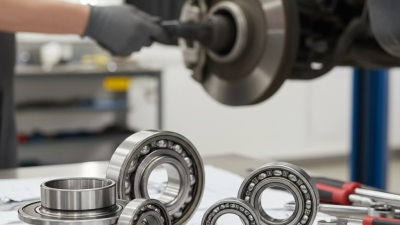
Keep the work area clean. Dust on a shaft can create false alignment. Heat a bearing evenly when a tight fit requires thermal mounting. Never strike the rings or rolling elements directly. Apply the specified lubricant quantity, then rotate the assembly slowly by hand. Too much grease can raise temperature. Too little can leave metal surfaces dry. Small details matter. The U.S. Department of Energy’s Operations and Maintenance Best Practices Guide reports that preventive maintenance may reduce maintenance costs by 12–18% compared with reactive work. Still, farm schedules are rushed, and even a good checklist can miss a loose seal.
Inspect bearings during seasonal service. Listen for rumbling, check unusual heat, and look for grease discoloration or metal particles. Correct shaft misalignment and eliminate water entry before installing a replacement. Replace the bearing when raceways show pitting, flaking, deep scoring, or measurable looseness. Do not replace only the bearing if the housing is worn. FAO reporting places global food losses between harvest and retail at roughly 13%, reminding buyers that equipment uptime affects more than repair budgets. Record the removal date, operating hours, lubricant, and failure condition. That record may reveal a pattern—but not always the whole cause.
The chart compares representative recommended inspection or relubrication intervals for common agricultural bearing applications. Actual intervals depend on load, speed, contamination, moisture, temperature, seal condition, and the bearing manufacturer’s instructions.
Buyer guidance: Inspect bearings during routine daily or shift checks, relubricate sealed or relubricatable units according to operating conditions, and replace any bearing showing excessive noise, vibration, heat, looseness, corrosion, or damaged seals. Always align the shaft, avoid impact loading during installation, and use clean tools and grease.